
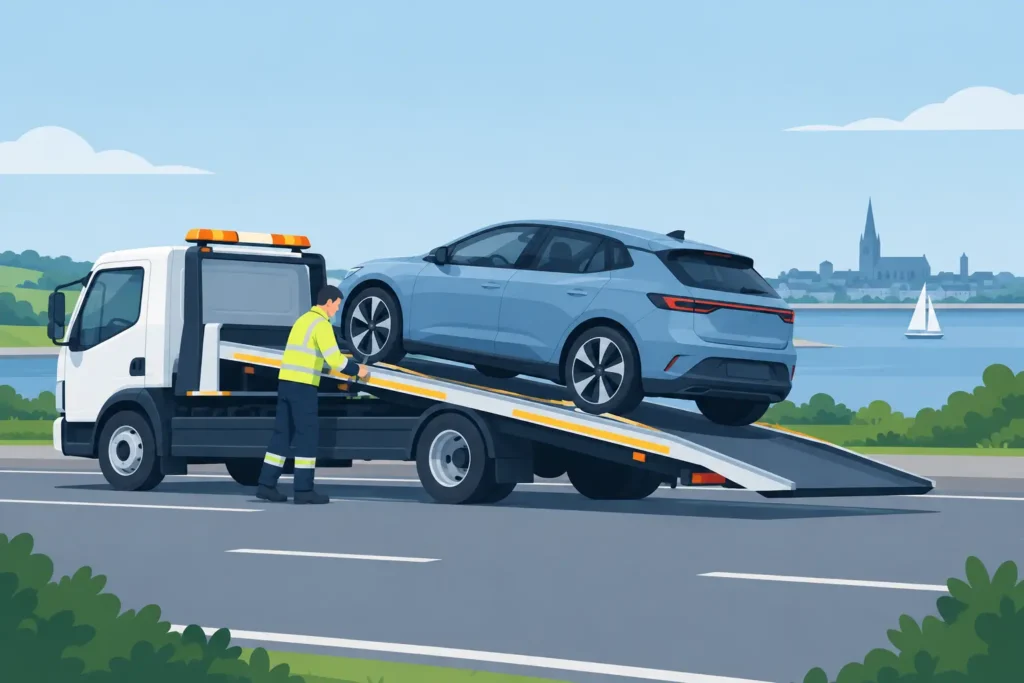
A warning light, lost power or a charging fault can leave an electric car feeling very different from a petrol or diesel breakdown. Electric vehicle recovery needs the right approach from the moment you stop. The aim is simple: keep you safe, avoid damage to the vehicle, and get it to your chosen destination without unnecessary delay.
For drivers in Chelmsford and across Essex, the immediate priority is not diagnosing every fault at the roadside. It is getting out of danger, giving clear information when you call for help, and allowing an experienced recovery operator to move the vehicle correctly.
Why electric vehicle recovery is different
Electric vehicles are often heavier than similar-sized petrol cars because of their battery packs. They also have different drivetrain layouts, high-voltage components and manufacturer-specific instructions for transport. That does not make them difficult to recover, but it does mean a rushed or unsuitable towing method can cause problems.
Many EVs should not be towed with their driven wheels on the road. Turning the wheels while the vehicle is switched off can damage the motor or other drivetrain parts. For this reason, recovery is commonly carried out using a flatbed, recovery lorry or suitable wheel-lift equipment, depending on the vehicle and the situation.
The best method depends on the make, model, condition of the vehicle and where it is stranded. A car parked safely outside a home is a different job from one stopped on a busy Essex road after an accident. A professional operator will assess access, traffic risks, whether the wheels can move freely, and the safest way to load the vehicle before starting the recovery.
Common reasons an EV needs recovery
A flat drive battery is the issue most people think of first, but it is not the only reason electric cars stop. Range can drop faster in cold weather, heavy traffic, poor weather or when travelling at motorway speeds. A charger may also fail to start, stop mid-session, or show a fault before the battery has received enough charge.
Some callouts are more familiar: punctures, collision damage, a damaged wheel, a locked steering system, a flat 12-volt battery or a fault warning that prevents the car from being driven. The small 12-volt battery still plays an important part in an EV. If it fails, the car may not wake up or release its charging cable, even when the main battery has plenty of charge.
There are also occasions when a vehicle can technically move but should not be driven. A warning about the high-voltage system, unusual smells, smoke, visible battery damage, or damage underneath the car after striking debris all need care. Do not try to continue your journey in those circumstances. Move away from the vehicle if it is safe to do so, keep others clear, and tell the recovery provider exactly what you have seen.
What to do while waiting for recovery
Your safety comes before the vehicle. If you can pull over safely, choose a firm, visible location away from moving traffic. On a fast road, get yourself and passengers behind a barrier where one is available. Do not stand between your vehicle and traffic, and do not attempt repairs in an exposed position.
When you call for electric vehicle recovery, have your location ready. A road name, postcode, nearby landmark or motorway junction can all help a local operator find you quickly. It is also useful to provide the vehicle registration, make and model, whether it is fully immobilised, and the nature of the problem.
There are four sensible actions to take before help arrives:
- Put on your hazard warning lights if it is safe and appropriate to do so.
- Keep the vehicle switched off unless emergency services or the manufacturer’s guidance says otherwise.
- Do not touch orange cables, damaged battery areas or components underneath the car.
- Tell the operator if the vehicle has been involved in a collision, has smoke or heat coming from it, or is still connected to a charge point.
If you have run out of charge, avoid repeatedly trying to restart or move the car. That can make a stressful situation worse, particularly if you are blocking access or parked on an incline. A recovery operator can arrange safe transport to a home address, garage, dealer or suitable charging location where practical.
How safe EV transport works
Safe handling starts with correct information. Recovery operators need to know whether the car can be put into neutral, whether it is locked in park, and whether any wheels are damaged or seized. Some electric vehicles have a transport mode or towing mode, while others need a particular sequence before they can be moved. The vehicle handbook can help, but you should never put yourself at risk trying to find a setting beside a busy road.
Once the vehicle is ready, it is normally loaded in a way that keeps the driven wheels from turning unnecessarily. It is then secured at suitable points for transport. Good recovery is not just about getting a vehicle onto a lorry quickly. Careful loading matters, especially with low-slung EVs, damaged suspension, wide tyres or battery packs fitted beneath the floor.
For an undamaged car with a simple fault, recovery may be straightforward. After a collision or impact underneath, extra precautions may be needed. The vehicle may need to be isolated, kept away from buildings or other vehicles, and taken directly to a location that can inspect it properly. This is why clear communication at the first call matters so much.
Can an EV be charged at the roadside?
Sometimes, but it depends on the location and the fault. Mobile charging can be useful for a vehicle that has simply run out of range in a safe, accessible place. It is not always the quickest answer, though. Charging enough energy to make a meaningful difference can take time, and it will not solve a tyre problem, fault warning, accident damage or failed 12-volt battery.
Recovery is often the better option when the vehicle is in an unsafe position, the battery is very low, there is a suspected electrical fault, or you need to get to a garage. It can also be the practical choice if you have children, work commitments, a van full of tools or a long wait ahead at a public charge point.
Choosing local help in Essex
When you are stranded, it helps to speak directly to someone who understands the roads around Chelmsford, from town-centre traffic to rural lanes and busy routes towards the A12. A local recovery service can focus on getting to you, assessing the vehicle on arrival and taking it where you need it to go.
Before agreeing to recovery, ask whether the operator can transport electric vehicles safely, where the vehicle will be taken, and whether the quoted price covers the distance involved. Be clear if the car is in a car park, underground bay, narrow lane or location with restricted access. Those details help the right recovery vehicle arrive first time.
Breakdown Recovery Essex provides 24-hour support for cars, vans and light commercial vehicles within around 30 miles of Chelmsford. Whether the problem is a depleted battery, puncture, mechanical fault or non-start, the focus is on a fast response, professional handling and safe transport to your chosen destination.
A stopped EV does not need to turn into a long, uncertain wait. Get yourself somewhere safe, explain the fault as clearly as you can, and arrange recovery rather than risking further damage by trying to drive or tow the vehicle yourself.