
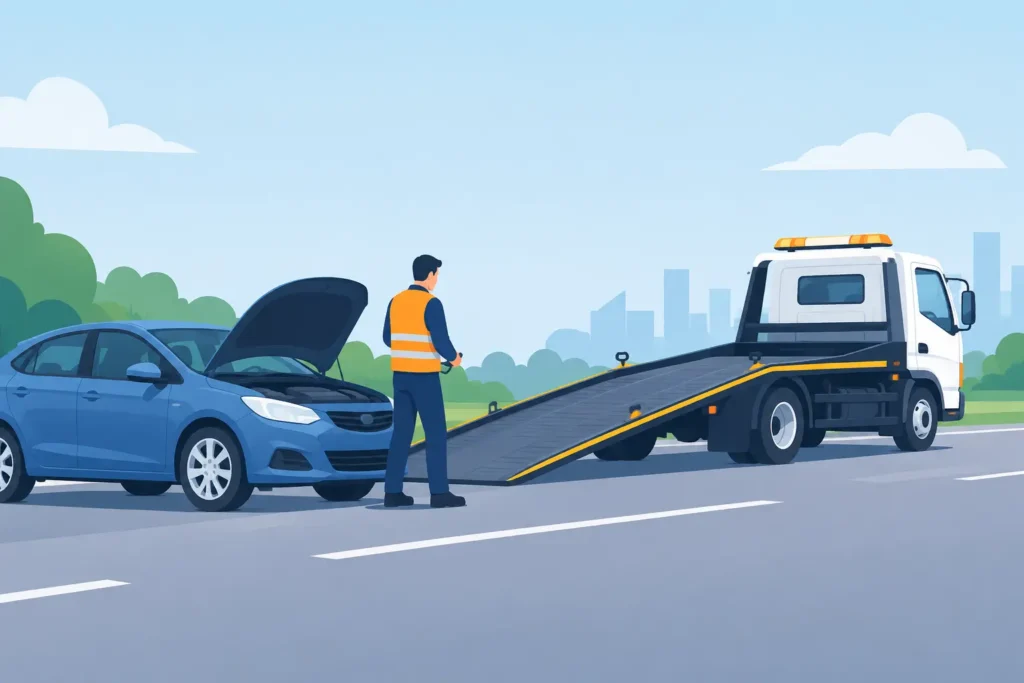
A breakdown is disruptive enough without wondering what happens to your vehicle next. If you need to arrange vehicle collection after breakdown, your first priorities are simple: get yourself somewhere safe, give the recovery operator clear information, and choose where the vehicle needs to go.
For drivers in Chelmsford and across Essex, a quick, direct recovery arrangement can make a difficult situation far more manageable. Whether your car will not start on the drive, your van has stopped on the way to a job, or you are stranded at the roadside late at night, knowing the right steps helps avoid delays and prevents further damage.
Make safety your first decision
Before calling for collection, consider your immediate surroundings. If you have broken down on a live road, move the vehicle to a safe place only if it is safe and practical to do so. Switch on your hazard lights, keep clear of moving traffic and, where possible, wait behind a barrier or in a safer location away from the vehicle.
On a motorway or busy dual carriageway, do not attempt repairs at the roadside. If you cannot safely leave the vehicle, or there is an immediate danger from traffic, contact the emergency services first. A recovery vehicle can collect your car or van, but your personal safety comes before getting the vehicle moved.
If the breakdown is at home, at work or in a car park, the situation may feel less urgent, but access still matters. Make sure the recovery operator knows if the vehicle is in a tight space, underground car park, gated area or on a slope. This helps them send the right vehicle and plan a safe collection.
How to arrange vehicle collection after a breakdown
The quickest way to arrange collection is to call a local recovery provider directly. Speaking to an operator means you can explain what has happened, confirm availability and ask how soon assistance can reach you. It also avoids the uncertainty of online forms when you are under pressure or need help outside normal working hours.
Have your location ready before you call. A postcode is useful, but it is not always enough when you are on a rural road or large industrial estate. Tell the operator the road name, direction of travel, nearby landmarks, junction numbers or the name of the pub, petrol station or business you can see. If your phone map shows a dropped pin or what3words location, this can also help identify your exact position.
You will also need to describe the vehicle. Give the registration number, make, model and colour, then explain whether it is a car, van or light commercial vehicle. Mention anything that may affect loading, such as a locked steering wheel, a flat tyre, accident damage, a low vehicle, an automatic gearbox or a vehicle that cannot be moved under its own power.
Finally, confirm the destination. You may want the vehicle taken home, to your usual garage, a main dealer, a tyre centre or another address that suits you. If it is outside usual opening hours, taking the vehicle home can be the sensible choice, provided there is suitable access and parking. The best destination depends on the fault, the time of day and whether a garage is ready to receive it.
Information that prevents avoidable delays
A recovery operator does not need a full mechanical diagnosis. A straightforward description is more useful: the engine cut out, a warning light came on, the clutch has failed, there is a puncture, or the vehicle was involved in an incident. Do not keep trying to start or drive a vehicle that is overheating, leaking fluid, making loud mechanical noises or showing a serious warning message.
Tell the operator if you have passengers, especially children, older people or anyone who needs additional assistance. Recovery is focused on moving the vehicle safely, but clear information helps the team consider the whole situation and advise you properly.
It is also worth mentioning if you have a heavily loaded van, tools inside or valuable equipment that needs to remain secure. You should remove personal belongings and take keys, documents, medication and anything you may need before the vehicle is loaded. Do not leave loose items where they can move around during transport.
Choose collection rather than risking more damage
It can be tempting to drive a short distance to a garage or ask a friend to tow you with a rope. In many cases, that creates a bigger problem. Continuing to drive after an engine warning, loss of oil pressure, overheating or a gearbox fault can turn a repairable issue into serious engine or transmission damage.
Informal towing also has risks. The vehicle being towed must be roadworthy enough to control safely, properly connected and covered by the right arrangements. On busy Essex roads, poor visibility, wet weather and impatient traffic make this a bad option for many breakdowns. Professional recovery equipment gives the vehicle proper support and avoids putting another driver at risk.
Vehicle collection is especially sensible for automatic cars, electric vehicles, cars with damaged wheels, and vans carrying stock or work equipment. Some vehicles require particular handling methods, and the recovery operator can take this into account before loading. It may cost more than trying to improvise, but it can protect a vehicle that is already vulnerable.
What happens when the recovery vehicle arrives
A professional operator will first assess the scene, the position of your vehicle and the safest way to load it. In some cases, a simple issue can be dealt with at the roadside. A flat battery, a wheel problem or a minor fault may be resolved without a full recovery if it is safe to do so.
Where collection is needed, the vehicle will be secured for transport and taken to the agreed destination. Ask the operator if you are unsure whether you can travel with the vehicle, as this can depend on the recovery vehicle, space available and the nature of the incident. If you need to make separate travel arrangements, do so before the vehicle leaves whenever possible.
Take a moment to check the destination address and contact details before loading begins. If the vehicle is being delivered to a garage, confirm that the garage is expecting it and knows where keys should be left if you will not be there. A small check at this stage can save a frustrating second journey later.
Local recovery makes a difference in Essex
When you are stranded, local knowledge is practical rather than just reassuring. An operator familiar with Chelmsford and the surrounding 30-mile area will understand common pinch points, rural lanes, access restrictions and the quickest sensible route to your chosen destination. That matters when you are trying to get home, reach a customer or protect a working day.
Breakdown Recovery Essex provides 24-hour collection and recovery for cars, vans and light commercial vehicles, with direct contact and a focus on safe, careful handling. The aim is not simply to tow a vehicle away, but to give you a clear next step when your plans have suddenly stopped.
Before you leave the vehicle
Once collection has been arranged, keep your phone charged and switched on so the driver can contact you if needed. If you are waiting somewhere safe, stay close enough to guide the recovery vehicle to the right place, particularly in a large car park, estate or unlit country lane.
Before handing over the keys, take your wallet, house keys, work tools, child seats if required and any essential belongings. Photograph obvious existing damage if the vehicle has been involved in an incident, and make sure the recovery team knows about any issue that could affect loading. Then confirm exactly where the vehicle is going and what will happen on arrival.
A breakdown rarely arrives at a convenient time, but you do not need to solve every mechanical problem at the roadside. Focus on safety, share accurate details and arrange a professional collection. Once your vehicle is in safe hands, you can deal with the repair with a clearer head.