
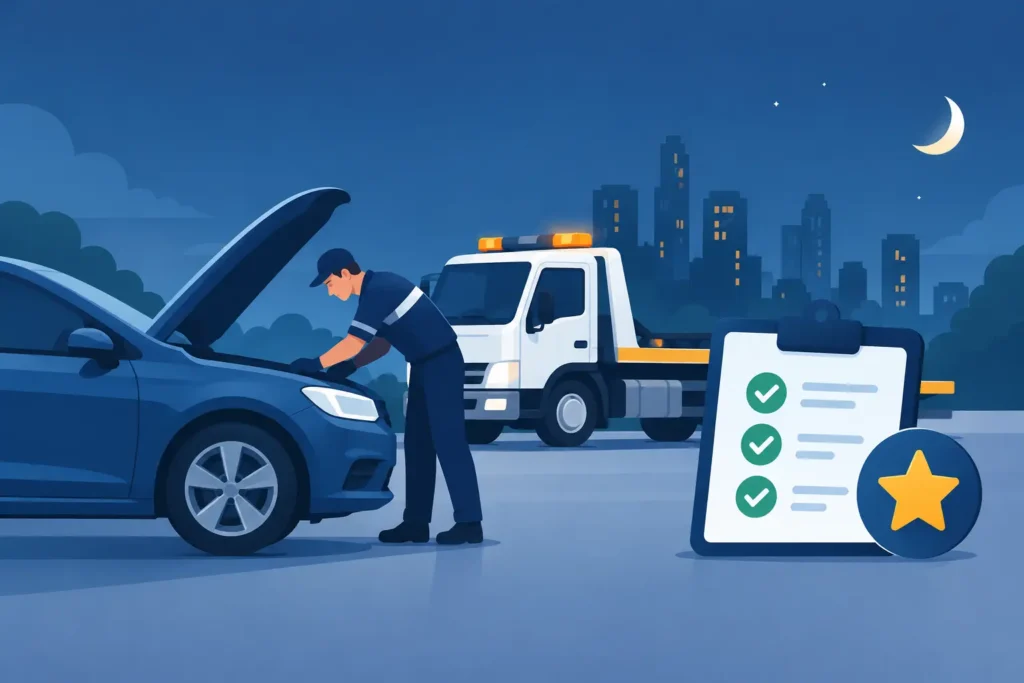
A breakdown at 11pm on a wet road outside Chelmsford feels very different from one outside a garage during working hours. You may be tired, carrying children, due at work early, or relying on your van for the next day’s jobs. This after-hours recovery service review explains what genuinely matters when you need help quickly, rather than simply comparing the lowest advertised price.
The right recovery provider should make the next step clear: speak to a real person, confirm where you are, establish whether the vehicle is safe to move, and arrange recovery to the destination you choose. At night, clear communication and careful handling are every bit as valuable as speed.
After-hours recovery service review: the essentials
A good out-of-hours recovery service is not just a vehicle with a tow rope. It is a practical response to a stressful situation. The operator needs to understand the local roads, assess the problem without overcomplicating it, and arrive equipped to deal with cars, vans and light commercial vehicles safely.
Start with availability. “24-hour” should mean you can contact the provider directly when you need them, including evenings, weekends and bank holidays. Some services route calls through a central booking system or ask you to complete an online form. That may be fine for pre-booked transport, but it is rarely reassuring when your vehicle has stopped on a dark roadside.
Direct phone access matters because the details can change quickly. You may discover that you are not at the junction you first thought, move to a safer location, or need to explain that the car will not roll or steer. A local operator who answers the phone can ask the right questions and give straightforward advice while recovery is arranged.
Fast response means realistic communication
Nobody wants to hear vague promises when they are stranded. A reliable provider should give you a realistic arrival estimate based on your location, traffic, weather and the type of vehicle involved. The nearest recovery vehicle is not always immediately free, particularly during severe weather or a busy weekend evening, so honesty is more useful than an unrealistic guarantee.
Fast service also means dispatching the right equipment first time. A small hatchback with a flat battery may need a different approach from a loaded work van with a suspected clutch fault. Giving accurate details when you call helps prevent delays. Share your location, registration, vehicle type, the problem if you know it, and whether the vehicle is in a safe place.
For Essex drivers, local knowledge can make a real difference. Rural lanes, poorly lit stretches of road and busy routes around Chelmsford can all make a breakdown harder to reach. A provider working locally is more likely to understand practical access issues and the quickest sensible route to you.
Safe recovery is not optional
Cost and arrival time are important, but safe loading should never be treated as an extra. Poor recovery can cause further damage, especially where a vehicle has a damaged wheel, locked steering, automatic gearbox issue or low ground clearance.
A professional operator will assess the vehicle before moving it. They should consider where it is positioned, whether it can roll freely, any visible damage and the safest way to load and secure it. If a roadside repair is practical, such as a battery boost or wheel change, it may get you moving again. If it is not, recovery to a garage, home or another destination is usually the safer choice.
This is particularly relevant for van drivers. Tools, stock and equipment can affect weight and handling, while lost time can mean missed jobs the following day. Explain whether the van is loaded and whether there are any height, width or access restrictions at the destination.
What fair pricing looks like after hours
After-hours recovery may cost more than a daytime callout. The operator may be travelling outside normal working hours, responding immediately and arranging a recovery rather than a routine collection. That does not mean pricing should be unclear.
Before agreeing to a callout, ask what the quoted price covers. A useful quote should make clear whether it includes attendance, loading, recovery mileage and delivery to your chosen destination. If extra mileage, difficult access, tolls or specialist equipment could affect the total, you should be told before the work begins wherever possible.
The cheapest initial figure is not always the best value. A low callout charge can become expensive if recovery mileage or additional work is left unclear. Equally, a higher quote may be reasonable if it covers prompt attendance, careful loading and a direct journey to your preferred garage or home.
It depends on the situation. If you are safely parked at home and need a non-urgent vehicle move, waiting until daytime may be sensible. If you are stranded, vulnerable, blocking access or cannot leave the vehicle safely, an immediate recovery is usually worth the cost.
Questions worth asking before you book
You do not need to know anything technical to arrange recovery, but a few direct questions will help you choose confidently. Ask whether the service covers your exact location and destination, how long the operator expects to take to reach you, and whether they can recover your type of vehicle.
It is also sensible to confirm where the vehicle can be taken. Some drivers need to get home first and arrange repairs later. Others want the vehicle delivered straight to a trusted garage, even if it is closed overnight. A flexible recovery service should be able to work with either plan, provided access at the destination is safe and possible.
If you are travelling with passengers, say so when you call. Recovery arrangements for people and vehicles are not always the same, and it is better to clarify this from the start. Parents with children, older passengers and anyone with mobility needs should not be left guessing about what happens next.
What to do while you wait for recovery
Your first priority is personal safety, not diagnosing the fault. If your vehicle is in a dangerous position, move away from traffic where it is safe to do so. Put on hazard lights, use a warning triangle only where appropriate and safe, and avoid standing near the carriageway. On a motorway or other high-speed road, follow the official safety guidance for your location and contact the relevant emergency services if there is immediate danger.
Once you are safe, keep your phone charged and listen for the recovery operator’s instructions. If you can, have your registration, exact location and destination ready. A nearby landmark, road name, postcode or a description of the direction you were travelling can all help locate you faster.
Do not attempt a repair you are not comfortable making, especially in the dark or close to moving traffic. A flat tyre, overheating warning or electrical fault can turn into a bigger problem if handled incorrectly. It is often safer to wait for professional assistance than risk injury or further vehicle damage.
Why local service can feel different
National membership providers can be useful, especially for drivers who travel long distances. However, their response may involve several stages: a call centre, contractor allocation and updates from a third party. When you are close to home in Essex, a direct local service can offer a simpler route from the first call to collection.
Breakdown Recovery Essex focuses on 24-hour support within 30 miles of Chelmsford, helping drivers arrange safe recovery for cars, vans and light commercial vehicles. For many people, the reassurance comes from speaking directly to someone who understands the area and can focus on getting the vehicle to the right place without unnecessary complication.
A good review is ultimately about how you feel once the recovery vehicle arrives. Were you kept informed? Did the operator treat you and your vehicle with care? Was the price explained clearly? Did you reach your chosen destination safely? Those are the details that matter long after the warning light has gone out.
If your vehicle stops after hours, take a breath, get yourself somewhere safe and make the call with clear information. The right local recovery support turns a difficult night into a manageable delay, so you can focus on getting home and sorting the repair in daylight.