
A breakdown on the A12, outside a Chelmsford supermarket or on a quiet Essex lane leaves little time for researching recovery methods. You want your vehicle collected safely, without adding damage or delay. The question of flatbed or tow lorry matters because the right method depends on your vehicle, its condition and where it has stopped.
For many cars and vans, a flatbed is the safest option. It keeps all four wheels off the road and gives the recovery operator full control during loading and transport. However, a conventional tow can still be suitable in the right circumstances. Here is how to understand the difference before help arrives.
Flatbed or tow lorry: what is the difference?
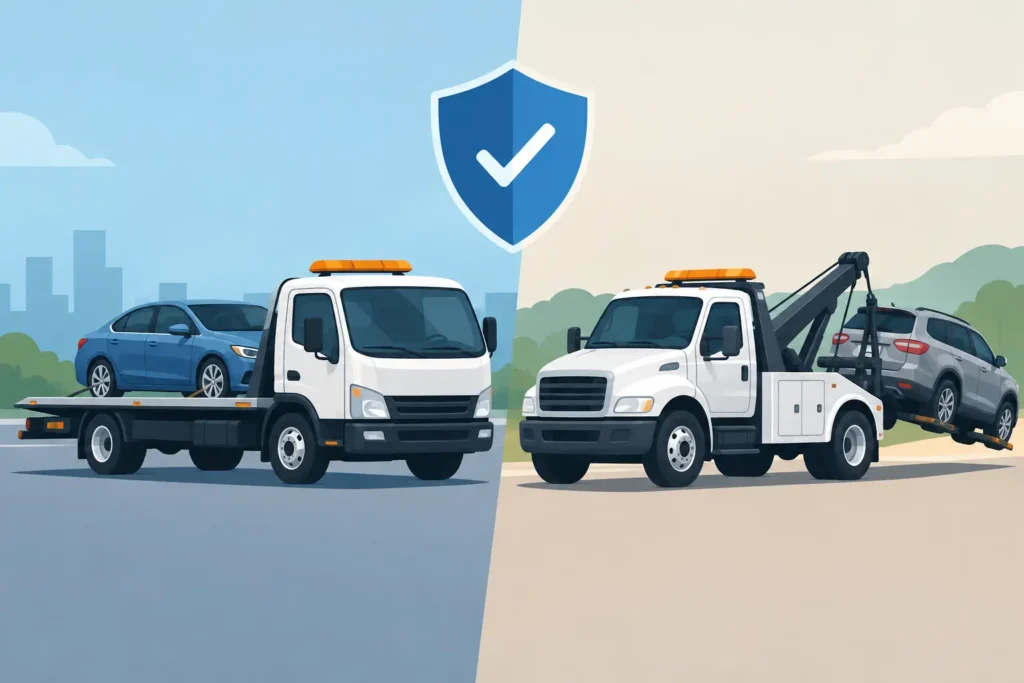
People often use “tow lorry” to describe any recovery vehicle. In practice, a recovery operator may use different equipment depending on the job. A flatbed recovery vehicle has a level loading bed that tilts or slides down, allowing your car or van to be winched fully onto it. The vehicle then travels with no tyres turning on the road.
A towing vehicle may lift one end of the broken-down vehicle, leaving the other wheels on the ground. This can be useful for short moves, straightforward recoveries and certain vehicle types. It is not automatically the best choice for every breakdown, especially where there may be damage to wheels, steering, suspension or the drivetrain.
The aim is not simply to move your vehicle. It is to get it to your chosen destination without making a bad situation worse.
When a flatbed recovery is usually the safer choice
Flatbed transport is often preferred when a vehicle cannot be driven, has suffered collision damage or needs careful handling. It is also a sensible option for automatic cars, electric vehicles, four-wheel-drive vehicles and low-clearance cars, although the operator will always assess the specific vehicle and situation first.
Your car has mechanical or drivetrain damage
If the engine has failed, a wheel is damaged, the steering is not responding properly or the suspension has collapsed, driving or towing the vehicle with wheels on the road could cause further problems. A flatbed keeps the vehicle stationary throughout the journey.
This matters after an accident too. Damage is not always obvious at the roadside. A car may look driveable but have a bent steering component, a leaking fluid line or a tyre rubbing against damaged bodywork. Loading it onto a flatbed gives you a safer route to a garage, home or another destination.
You drive an automatic, EV or four-wheel-drive vehicle
Many modern vehicles have manufacturer guidance about how they should be recovered. Some automatics must not be towed with driven wheels on the road because it can damage the gearbox. Four-wheel-drive systems can also be affected if one axle turns while the other does not.
Electric vehicles require particular care. They can be heavier than expected, have specific recovery points and may need to be isolated following a collision or fault. A flatbed is commonly the most appropriate choice because it avoids rotating the wheels during transport. The recovery operator should still check the vehicle type and visible condition before loading.
The vehicle needs a longer journey
For a short relocation from an unsafe roadside position, a tow may sometimes be practical. For transport across Essex or to a garage further away, a flatbed generally provides better protection and stability. Your vehicle is secured to the bed rather than following behind the recovery vehicle on the road.
That can also bring peace of mind if you are transporting a cherished car, a work van full of tools or a vehicle that has already suffered a stressful breakdown.
When towing may be appropriate
A tow is not a second-rate service. Used correctly, it can be a safe and efficient solution. The right choice depends on access, vehicle condition, the distance involved and the recovery equipment available.
If a vehicle is intact, its wheels and steering work properly, and it only needs moving a short distance, lifting one end may be suitable. This can be useful when space is limited or when the priority is clearing a vulnerable position quickly before arranging onward transport.
For example, a car blocking a narrow residential road may need to be moved to a safer place before a fuller assessment can take place. A professional operator will not simply attach a rope and pull. They will consider safe towing points, traffic, road surface, vehicle weight and whether the vehicle is safe to move at all.
Never attempt an improvised tow with a friend’s car unless you are fully equipped, legally compliant and confident it is safe. Tow ropes can fail, brakes may not work as expected, and a stranded vehicle can quickly become a greater risk to both drivers and other road users.
What affects the recovery method?
The recovery operator will usually need a few clear details before deciding whether a flatbed or towing arrangement is best. Giving accurate information helps them arrive prepared and can save time at the roadside.
Tell them the make, model and registration if possible, whether it is manual, automatic, electric or four-wheel drive, and what has happened. Mention any warning lights, flat tyres, collision damage, locked wheels, fluid leaks or missing keys. If the vehicle is a van, explain whether it is loaded and whether it carries tools, stock or anything unusually heavy.
Your location matters just as much. A vehicle on the hard shoulder, a busy roundabout or a country lane presents different access and safety issues. Share the road name, nearby landmark, direction of travel and any information from your sat-nav. At night or in poor weather, describe anything that could make the vehicle difficult to see.
A good local recovery service will also ask where you would like the vehicle taken. That may be your home, a trusted garage, a dealership or a workplace. Choosing the destination early keeps the recovery straightforward once the vehicle has been loaded.
Stay safe while you wait for recovery
The first job is protecting yourself and your passengers. If you can safely move the vehicle out of live traffic, do so. Switch on your hazard lights, apply the handbrake and use sidelights if visibility is poor. Put on a high-visibility jacket if you have one, but do not take risks to retrieve items from the boot or walk around in moving traffic.
On a motorway, get behind the barrier where possible and move well away from the carriageway. Do not wait inside the vehicle if it is exposed to fast-moving traffic. On ordinary roads, stand in a safe position away from the traffic flow and keep children close.
Avoid repeatedly trying to start a vehicle that has overheated, is leaking fluid or has displayed a serious warning light. Continuing to crank the engine can turn a manageable fault into a more expensive repair. If smoke is coming from the vehicle or you smell burning, move away from it and contact the emergency services where there is immediate danger.
Take a few photographs if it is safe to do so, particularly after an accident or tyre failure. They may help a garage understand the problem later. Then wait for the recovery operator and follow their instructions during loading. Keep personal belongings with you, and let them know about any valuable equipment in the vehicle before it is moved.
Why professional handling matters
The recovery method is only part of the service. Safe loading relies on suitable winching equipment, secure straps, the correct attachment points and an operator who knows how to assess a vehicle under pressure. Rushing a damaged car onto the wrong equipment can cause scraping, bumper damage or more serious mechanical issues.
At Breakdown Recovery Essex, the focus is on choosing the practical, safe option for the vehicle in front of us – whether that means careful flatbed transport or an appropriate tow for a short, straightforward move. For motorists, van drivers and local businesses, that means clear communication and recovery to the destination that works for you.
If you are unsure which option you need, do not worry about using the technical terms. Explain what has happened, where you are and what vehicle you drive. The safest recovery starts with getting out of danger, giving honest details and letting an experienced operator choose the method that protects your vehicle on the journey ahead.