
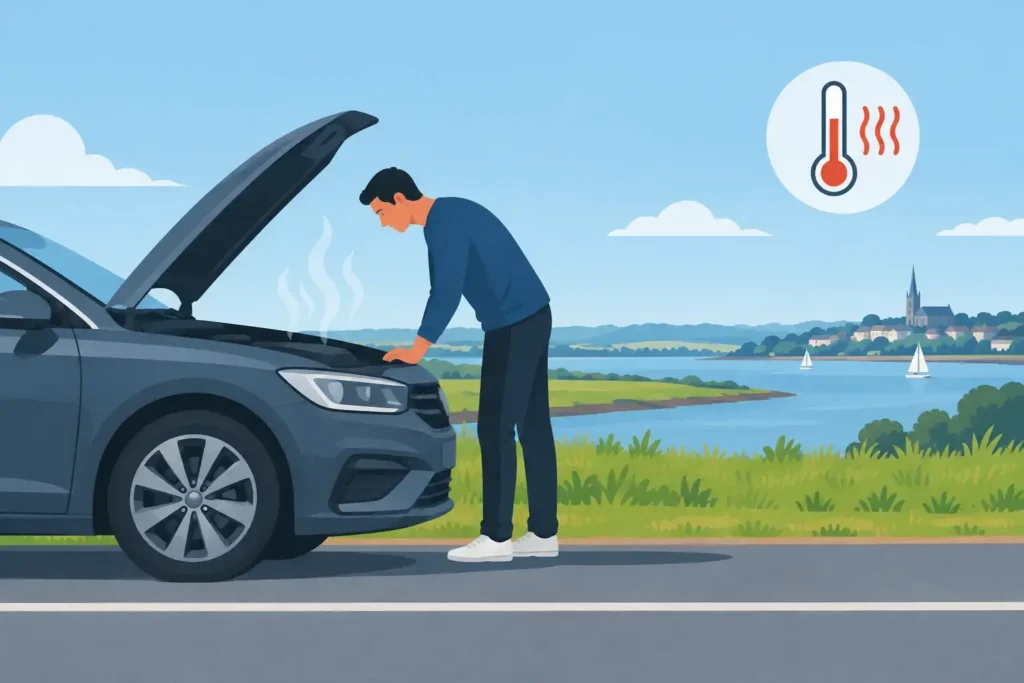
A temperature gauge creeping towards the red is not something to gamble on, especially when you are stuck in Chelmsford traffic, heading along the A12 or relying on your van for the day’s work. Knowing how to avoid engine overheating can save you from a costly repair, a missed job or an unsafe roadside breakdown.
An engine does not usually overheat without a reason. Low coolant, a leak, a failing fan or a hard-working engine can all cause temperatures to rise. The good news is that regular checks and a calm response when something looks wrong can prevent a small issue becoming major damage.
Why engines overheat
Your engine produces a great deal of heat every time you drive. The cooling system controls that heat by circulating coolant around the engine, through the radiator and back again. When one part of that system is not doing its job, heat can build up quickly.
Low coolant is one of the most common causes. Coolant can drop because of a visible leak, such as a split hose or damaged radiator, but it can also fall slowly over time. A loose cap, worn water pump or internal engine fault may be less obvious, which is why checking levels matters.
A radiator that is blocked, damaged or full of old coolant cannot release heat properly. The same applies when the cooling fan does not switch on, particularly in slow-moving traffic. On an open road, air passes through the radiator naturally. In queues, at roadworks or during a warm summer day, the fan has to do much more of the work.
Thermostat faults can also cause trouble. The thermostat controls coolant flow through the engine. If it sticks shut, hot coolant cannot reach the radiator as it should. It is a relatively small part, but ignoring the warning signs can lead to serious engine damage.
Simple checks to avoid engine overheating
The most useful checks take only a few minutes and are best done before a long journey, after a service interval or whenever you notice anything unusual. Always check coolant when the engine is completely cold. Never remove the coolant reservoir cap or radiator cap from a hot engine, as pressurised steam and boiling liquid can cause severe burns.
Start by looking at the coolant expansion tank. The level should sit between the minimum and maximum marks. If it is low, use the coolant specified for your vehicle rather than topping up with whatever is available. In an emergency, clean water may help you get to safety, but it is not a long-term substitute for the correct coolant mixture and the underlying cause still needs checking.
Look underneath the vehicle after it has been parked. A coloured puddle, often pink, green, blue or orange depending on the coolant used, may point to a leak. Also check for damp hoses, white crusty residue around joins, or a sweet smell from the engine bay. These are all reasons to arrange an inspection before relying on the vehicle for a longer trip.
Your dashboard deserves attention too. The temperature gauge should settle at its usual position once the engine has warmed up. If it starts running higher than normal, do not simply assume it is because of the weather. A warning light, a message about coolant level or a gauge moving upwards is the vehicle giving you time to act.
Driving habits that reduce heat build-up
Most well-maintained vehicles can cope with normal Essex traffic, but certain conditions put extra strain on the cooling system. Towing, carrying heavy tools or stock in a van, climbing hills, prolonged idling and stop-start driving all make the engine work harder.
If you drive a light commercial vehicle, make sure loads are within the manufacturer’s limits and properly distributed. Overloading affects more than handling and braking – it can increase engine strain, especially on warm days or longer runs. A vehicle that regularly carries weight may also need more frequent servicing than one used only for short school runs.
In heavy traffic, keep an eye on the gauge rather than staring at it constantly. If the temperature begins to climb, turn off the air conditioning if it is safe and practical to do so, as this reduces demand on the engine. Switching the cabin heater to hot and increasing the fan can draw some heat away from the engine, although it will make the cabin uncomfortable. This is only a temporary measure to help you reach a safe place to stop, not a repair.
Avoid revving a hot engine or continuing to drive uphill when the temperature warning is on. Pulling over for a few minutes may feel inconvenient, but carrying on can warp the cylinder head, damage the head gasket or leave you stranded where it is far harder to stop safely.
What to do if the temperature rises while driving
If the gauge approaches the red zone, a warning light appears or steam comes from the bonnet, treat it as urgent. Find a safe place to pull over as soon as possible. Do not stop on a blind bend, at a busy junction or in a live lane unless you have no alternative.
Once stopped, switch off the engine. Put the hazard lights on and keep clear of moving traffic. If you are on a motorway or major dual carriageway, follow roadside safety guidance and move behind a barrier where it is safe to do so. Do not stand in front of or behind your vehicle.
Do not open the bonnet immediately if there is steam. Give the engine time to cool, and do not touch the radiator cap, coolant cap or hoses. A hot cooling system remains pressurised after the engine has stopped. Opening it too soon is dangerous and can make a low-coolant problem worse.
After the engine has cooled fully, you may be able to look for an obvious leak or check the coolant level. However, do not restart the vehicle if coolant is empty, steam continues, the warning light returns, or you can see fluid pouring out. Driving with an overheating engine is one of the quickest ways to turn a manageable repair into a replacement-engine bill.
When a short delay needs professional recovery
There is a difference between a vehicle that has run slightly warm once and one that is unsafe to continue driving. If the temperature has entered the red, you have lost coolant, the engine is misfiring, or there is a strong burning smell, recovery is usually the sensible choice.
This is particularly true for vans carrying tools, goods or equipment. Trying to nurse an overheating vehicle to a garage can put the engine, your load and your day’s work at greater risk. A proper recovery lets you choose a safe destination, whether that is home, a trusted garage or another suitable location.
Breakdown Recovery Essex provides local, round-the-clock recovery for cars, vans and light commercial vehicles when continuing your journey is not the safe option. Getting help early can protect the vehicle from further damage and remove the pressure of deciding what to do at the roadside.
Keep the cooling system maintained
Coolant does not last forever. Over time, its protective properties weaken and contamination can build up. Follow your manufacturer’s servicing schedule for coolant replacement, and ask a garage to inspect the radiator, hoses, water pump, thermostat and cooling fan if the vehicle has a history of running hot.
Be especially alert before a summer holiday, a long motorway journey or a period when your vehicle will be carrying more weight than usual. A quick coolant check is easy to overlook when life is busy, but it is far easier than dealing with steam under the bonnet at the side of the road.
If your gauge rises, act early, stop safely and let the engine cool. A cautious decision at that moment could be what gets you home with a repairable fault rather than facing a much bigger problem.