
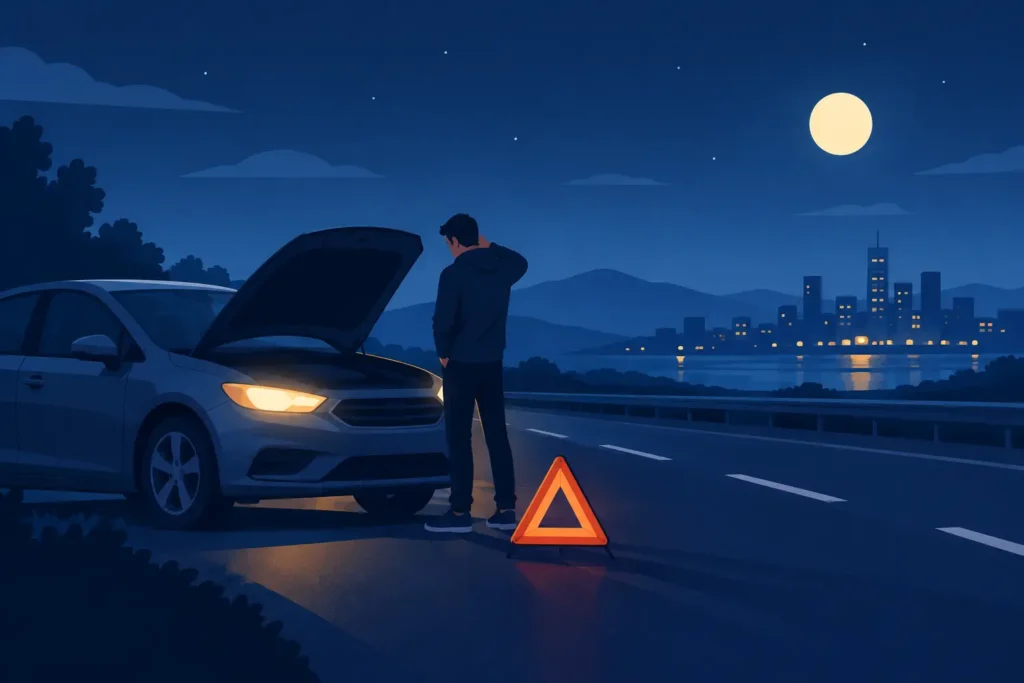
A car that will not start outside your home is frustrating. A breakdown on a dark road after a late shift, family visit or delivery run is something else entirely. Late night recovery is about getting you out of a vulnerable situation safely, without adding damage to your vehicle or leaving you guessing what happens next.
Whether you drive a car, van or light commercial vehicle, the best response is calm, practical and quick. Your immediate aim is not to diagnose every fault at the roadside. It is to make yourself safe, give clear location details and arrange professional help when the vehicle cannot be driven.
Late Night Recovery Starts With Your Safety
If your vehicle is still moving, look for the safest possible place to stop. A lay-by, a well-lit side road, a petrol station or a safe parking area is usually better than stopping on a bend, at a junction or on a narrow country road. Use your hazard warning lights as you slow down and pull over.
Once stopped, switch on your sidelights if it is dark and keep your hazard lights on where appropriate. Put on a high-visibility jacket if you have one, but do not take risks to retrieve equipment from the boot if traffic is passing close by. If you can leave the vehicle safely, move well away from the carriageway and stay behind a barrier where one is available.
On a motorway or major dual carriageway, never try to repair the vehicle yourself at the roadside. If you can reach an emergency refuge area, use it. If you are stopped in a live lane and cannot get to a safe place, call 999 straight away and follow the advice given. Do not attempt to place a warning triangle on a motorway.
On quieter Essex roads, conditions can still be difficult after dark. Visibility may be poor, verges may be soft, and passing vehicles can approach faster than expected. Keep passengers away from the road, particularly children, and avoid standing between your vehicle and oncoming traffic.
Do Not Turn a Small Fault Into a Bigger Problem
It is tempting to keep trying when a vehicle will not start or when a warning light appears. A few sensible checks are fine if you are parked safely: make sure there is fuel, check that the vehicle is in park or neutral, and look for an obvious flat tyre. Beyond that, repeated attempts can make matters worse.
Continuing to drive with overheating, oil pressure, brake, steering or serious engine warnings can turn a repair into major damage. The same applies to a puncture that has left the tyre flat, a dragging noise, smoke, burning smells or fluid leaking beneath the vehicle. Switch off the engine and arrange recovery rather than hoping it will get you home.
Vans and light commercial vehicles need particular care. A loaded van handles differently, and driving it with a tyre problem, brake issue or overheating engine can put both the driver and the load at risk. For tradespeople and delivery drivers, losing a working vehicle is disruptive enough without creating further repair costs.
Give Clear Details When You Call for Help
At night, a fast response depends on being able to find you. Before calling, take a moment to check your location. Your mobile phone’s map can often provide a road name, postcode, nearby business or live location. If you are on an A-road, note the direction you were travelling, the nearest junction, landmark or village, and any road signs you have passed.
Explain what has happened in plain terms. For example, say whether the engine has cut out, the vehicle will not start, there is a flat tyre, you have been involved in a minor incident, or a warning light has appeared. Mention if the vehicle is blocking an entrance, is in a car park with restricted access, is loaded, or has passengers with you.
It also helps to have the vehicle registration, make and model ready. Tell the recovery operator where you want the vehicle taken. That may be your home, a trusted garage, a dealership or another safe address. A professional recovery service should explain what is possible and handle your vehicle carefully from collection to destination.
When Recovery Is Better Than a Roadside Fix
Some faults can be resolved quickly. A flat battery may be boosted, a tyre may be changed if you have a safe spare and the right tools, or a simple issue may be identified at the roadside. But late at night, conditions matter as much as the fault itself.
If the vehicle is in an unsafe location, visibility is poor, you are unsure of the problem, or a repair would mean working close to traffic, recovery is normally the safer option. There is no prize for staying with a vehicle on a dark roadside longer than necessary.
Recovery is also the right choice after an accident, even if the car seems driveable. Damage underneath the vehicle, to a wheel, tyre, steering or cooling system is not always obvious. Moving it further can be unsafe and may complicate repairs. Getting it transported to a chosen garage gives you a better chance to deal with the issue properly in daylight.
Preparing for a Late-Night Breakdown
No one plans a breakdown, but a few items in the vehicle make an awkward situation easier to manage. Keep a charged mobile phone or charging lead, a high-visibility jacket, torch, warm layer and drinking water available. If you regularly travel with children, an extra blanket can make a long wait much more comfortable.
For commuters, checking fuel levels before an evening journey is a simple habit that avoids unnecessary trouble. Van drivers should pay attention to tyre condition and load security, especially after a busy working day. Poorly maintained tyres and neglected warning lights have a habit of becoming urgent problems at the most inconvenient time.
It is also worth saving a trusted local recovery number before you need it. When you are stranded, cold or worried, you do not want to spend time searching through options and trying to work out who covers your area. A direct call to an experienced local operator gives you a clear next step.
What a Professional Recovery Should Look Like
A good late night recovery service does more than tow a vehicle away. It begins with clear communication: confirming where you are, asking about the fault and vehicle, and setting expectations about collection. When the operator arrives, they should assess the safest way to load or move the vehicle rather than rushing the job.
Careful handling matters, particularly with automatic vehicles, electric or hybrid cars, lowered vehicles and vans carrying equipment. The recovery method needs to suit the vehicle and its condition. The cheapest-looking option is not always the best value if it risks further damage or leaves you at an unsuitable destination.
Breakdown Recovery Essex provides 24-hour support for motorists within 30 miles of Chelmsford, recovering cars, vans and light commercial vehicles to the destination that works for you. The focus is straightforward: a rapid local response, safe vehicle handling and practical help when your journey cannot continue.
After Your Vehicle Has Been Recovered
Once you and the vehicle are somewhere safe, take photographs of any visible damage or dashboard warnings if you have not already done so. Make a note of what happened, including unusual noises, smells or warning lights. Those details can help a garage identify the fault more quickly.
If you rely on the vehicle for work, contact your employer, customers or insurer when you can. It may be possible to rearrange the next day’s jobs, book repairs promptly or arrange alternative transport. A late-night breakdown is inconvenient, but a clear plan prevents it from taking over the following day as well.
The main thing to remember is that being stranded is not a problem you need to solve alone at the roadside. Get yourself to safety first, make one clear call, and let the vehicle be recovered properly so you can get home and deal with the repair from a place of safety.