
A vehicle that will not start can turn a normal journey into a difficult roadside situation very quickly. Transporting non-running vehicles safely is not simply a matter of attaching a rope and setting off. The condition of the vehicle, where it has stopped, and whether its steering, brakes and tyres still work all affect the safest way to move it.
For drivers in Chelmsford and across Essex, the priority is to protect people first and prevent further damage to the car or van. A professional recovery vehicle is often the safest option, particularly after a breakdown, collision or mechanical fault. Knowing what to do while you wait can make the whole recovery smoother and less stressful.
Start by making the roadside safe
If the vehicle has stopped on a live road, move yourself and any passengers away from traffic as soon as it is safe to do so. Switch on the hazard warning lights and, where appropriate, wear a high-visibility jacket. Do not stand between your vehicle and moving traffic, and avoid opening the bonnet beside a busy carriageway unless it is genuinely safe.
On a motorway or high-speed road, personal safety matters more than saving time or trying a quick repair. Leave the vehicle by the side furthest from traffic where possible, get behind a barrier if there is one, and contact a recovery provider. Never attempt to use a tow rope on a motorway.
Before arranging transport, take a moment to check the vehicle’s position. Let the recovery operator know if it is in a car park, on a narrow residential street, in a garage, on a private drive, or stuck somewhere with restricted access. Clear information helps them arrive with the correct equipment and plan a safe loading position.
Why a non-running vehicle needs the right recovery method
A vehicle may be non-running for many reasons: a flat battery, clutch failure, engine fault, overheating, accident damage or a puncture. Those faults do not all call for the same recovery approach.
If the engine has failed but the wheels, steering and brakes remain in good working order, the vehicle may be straightforward to winch onto a recovery lorry. If a wheel is damaged, the steering is locked, the gearbox is stuck, or the car has suffered collision damage, extra care is needed. Pulling a damaged vehicle in the wrong direction can worsen suspension, tyre, bodywork or drivetrain damage.
Modern cars can also be less forgiving than older models. Automatic gearboxes, electric vehicles, four-wheel-drive systems and vehicles with electronic parking brakes may have manufacturer-specific requirements for moving them. Some should not have driven wheels turning while they are being towed. In these cases, a flatbed or recovery vehicle with the right loading equipment is usually the sensible choice.
For vans and light commercial vehicles, weight is another consideration. A loaded work van can be significantly heavier than expected, and loose tools or stock can shift during loading. Tell the recovery operator if the vehicle is carrying equipment, materials or a heavy load so it can be secured and transported correctly.
Transporting non-running vehicles safely with a flatbed
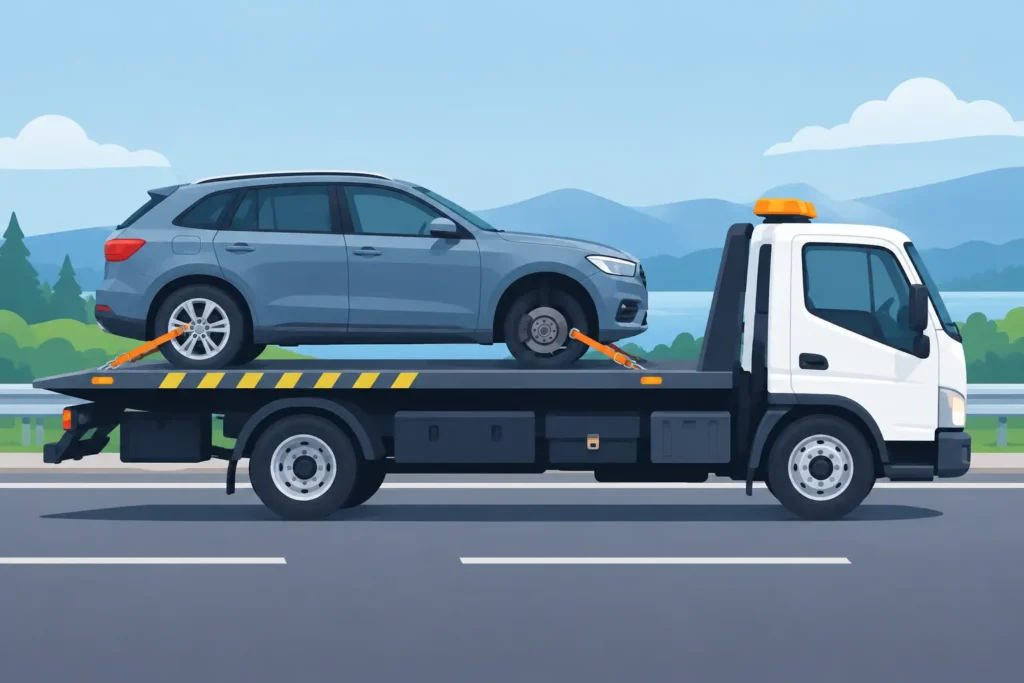
For many breakdowns, a flatbed recovery vehicle offers the best protection. The non-running car or van is winched onto a level bed, secured at the wheels and carried without its tyres rolling on the road. This reduces the risk of further damage and avoids relying on the broken vehicle’s brakes or steering during transit.
A proper recovery operator will assess the vehicle before loading. They will look for obvious damage, check whether the wheels can turn, and identify safe towing or winching points. This matters because recovery eyes and anchoring points are designed for a specific purpose. Attaching straps or chains to a weak suspension component, bumper or axle part can cause expensive damage.
Once loaded, the vehicle should be restrained securely, with suitable straps and wheel restraints. It should not be able to move forwards, backwards or sideways on the bed. The operator should also consider low ground clearance, loose panels, damaged bumpers and any fluid leaks before setting off.
Flatbed recovery is particularly useful when a vehicle has no brakes, has been involved in an accident, has a seized wheel, or cannot be safely rolled. It may take slightly longer to load than a simple tow, but it is usually the better trade-off when protecting the vehicle is the priority.
When a tow is not the answer
It can be tempting to ask a friend to tow your car home with a rope or strap. On a quiet, short route and with a roadworthy towed vehicle, this can sometimes appear straightforward. In practice, it carries risks that many drivers underestimate.
The towed vehicle needs effective steering, brakes and tyres, and the driver must be able to control it at all times. Power steering and brake assistance may not work with the engine off, making the vehicle much harder to steer and stop. Visibility can be poor, especially in the dark or wet weather, and sudden braking can cause the tow rope to snap or the vehicles to collide.
Towing also requires the correct equipment, suitable warning arrangements and drivers who understand what they are doing. It is not a good option for a vehicle with accident damage, an automatic gearbox concern, a wheel problem or an electrical fault that affects lights. If there is any doubt, arrange professional transport instead.
Prepare the vehicle for collection
While waiting for recovery, there are a few practical steps that can help, provided it is safe to carry them out. Remove valuables, work tools, paperwork and anything loose from the cabin. If the vehicle is likely to be transported on a flatbed, make sure the recovery operator can access the handbrake, gear selector and steering wheel.
Have the keys ready, including locking wheel nut keys if you have them. Tell the operator about any modifications, lowered suspension, parking restrictions, dead battery, wheel locks or access problems. If the car is parked in an underground space or tight driveway, mention the height and width restrictions before they set out.
Take a few clear photographs of the vehicle if it has been damaged or if you are arranging transport after an incident. This is sensible for your own records and can be useful if you later need to speak with an insurer, garage or other party.
Do not try to force a locked steering wheel, release an electronic parking brake without knowing how, or move a damaged vehicle by pushing it into traffic. A small amount of patience is far safer than turning a recoverable breakdown into a more serious problem.
Give the recovery operator the details they need
A fast recovery begins with accurate information. When you call, explain the make and model of the vehicle, its registration, your exact location and the fault as you understand it. Mention whether the vehicle is blocking a road, whether anyone is vulnerable or stranded with you, and where you want the vehicle taken.
It also helps to be specific about the vehicle’s condition. Can it roll? Are the wheels pointing straight? Is the handbrake stuck on? Has it been in a collision? Is there smoke, a fuel smell or a fluid leak? These details allow the operator to decide whether they need a flatbed, wheel skates, a winch or another safe loading method.
A good local recovery service will not treat every job the same. Breakdown Recovery Essex provides 24-hour recovery for cars, vans and light commercial vehicles around Chelmsford, with transport arranged according to the vehicle’s condition and the location of the breakdown.
Choose the right destination
Your chosen destination affects the recovery plan. A local garage may be best if repairs are likely to start quickly, while home can be more practical if the fault happened late at night or you need time to decide what to do next. For commercial drivers, getting the van to a trusted repairer may reduce lost working time.
Check that the destination is accessible before the vehicle is collected. A narrow drive, steep entrance, low gate or crowded roadside can make unloading more difficult. If you are taking the vehicle to a garage, confirm that it can accept the vehicle and that someone will be available if you are arriving outside normal opening hours.
The safest destination is not always the nearest one. A secure, accessible location where the vehicle can be unloaded properly is often the better choice.
A calm response protects your vehicle
When a car or van will not run, the pressure to get it moved quickly is understandable. But rushing a tow, guessing where to attach a strap or trying to drive with a serious fault can lead to more damage and more cost.
Get yourself to a safe place, give clear details about the problem, and choose a recovery method that suits the vehicle rather than the quickest-looking option. Careful transport gives your vehicle the best chance of reaching its destination ready for inspection and repair.