
A warning light, a flat tyre or a car that will not restart can be stressful enough without wondering whether recovery will make the problem worse. So, does towing damage electric cars? It can if the wrong method is used. Electric vehicles need to be recovered with more care than many petrol or diesel cars, particularly when their driven wheels are left on the road.
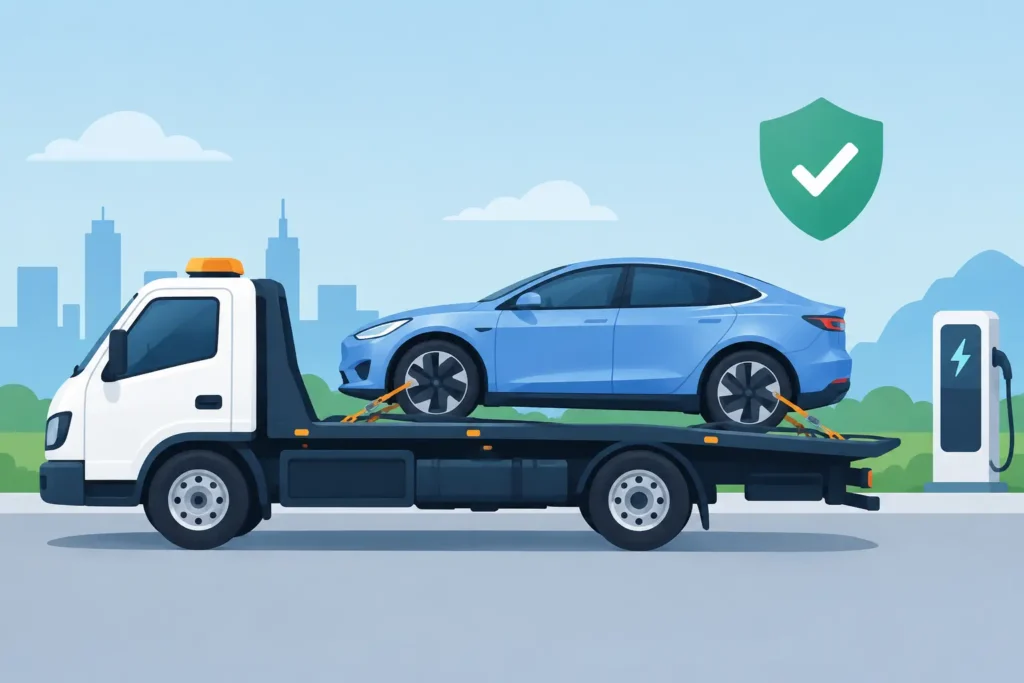
For most EVs, a flatbed recovery vehicle is the safest answer. It keeps every wheel off the ground and avoids forcing the electric motor, drivetrain or braking system to turn when the car is switched off. If you are stranded in Chelmsford or elsewhere in Essex, tell the recovery operator that your vehicle is electric as soon as you call. That one detail helps them bring the right equipment and plan a safe collection.
Why towing an electric car can cause damage
Electric cars do not all work in exactly the same way, but many use their motor to slow the vehicle and recover energy through regenerative braking. When the driven wheels rotate, they can turn the motor too. If this happens while the vehicle is off, in a fault condition or not set to its approved recovery mode, electricity may be generated where the system is not expecting it.
That can put strain on parts such as the inverter, motor and high-voltage electrical system. In the worst case, it may lead to expensive faults that were not present when the car first broke down.
There is another practical issue: many EVs do not have a conventional gearbox that can simply be placed in neutral and forgotten. Some need power from the 12-volt battery to select neutral or release the electronic parking brake. If that smaller battery is flat, or the car has an electrical fault, moving it with a wheel-lift may be difficult or unsafe.
The battery pack itself is usually protected underneath the car. It is not normally damaged simply because the vehicle is transported, but poor loading, dragging or lifting in the wrong place can cause underbody damage. That is why proper recovery points, ramps and secure wheel restraints matter.
Does towing damage electric cars with two wheels on the road?
Often, yes. Towing an EV with its driven wheels on the road is the method most likely to cause damage. The risk depends on whether the car is front-wheel drive, rear-wheel drive or four-wheel drive, as well as the manufacturer’s instructions.
A front-wheel-drive EV may be recoverable by lifting its front wheels, leaving the rear wheels rolling. A rear-wheel-drive model may need the rear wheels raised instead. However, that does not automatically mean wheel-lift recovery is suitable. The vehicle may have a locked parking brake, a low front bumper, a damaged wheel, restricted towing instructions or a fault that prevents it from entering the required mode.
Four-wheel-drive and dual-motor EVs need particular caution because all four wheels may be connected to electric drive components. In many cases, a flatbed is the correct choice. Do not assume that an EV can be treated like an ordinary automatic car just because it appears to roll freely.
The handbook for your exact make and model is the final word. Manufacturers may permit limited recovery on dollies, specify a very short distance at low speed, or require all four wheels to be off the ground. Those instructions can change between model years and versions.
Why a flatbed is usually the safest recovery option
A flatbed takes the vehicle fully clear of the road, so no wheels need to rotate during transport. This reduces the risk to the drivetrain and gives the recovery operator more control over loading.
It is especially useful when an EV has suffered a puncture, collision damage, suspension damage or a fault that has left the parking brake applied. It is also the sensible option when the vehicle will not select neutral, has no 12-volt power or is displaying a serious electrical warning.
Flatbed recovery is not just about avoiding drivetrain damage. EVs are often heavier than comparable petrol cars because of the battery pack. A suitable recovery vehicle and correctly rated winch are needed to load and secure them safely. The car should be pulled onto the bed in a controlled way, using approved recovery points rather than attaching equipment to suspension parts or beneath the battery area.
At Breakdown Recovery Essex, we assess the condition of the vehicle before moving it and arrange recovery to your chosen destination within our local service area. If it is safe and practical, we can also help with straightforward roadside issues rather than transporting the vehicle unnecessarily.
What to tell your recovery operator
Clear information makes a real difference, especially if you are stopped on a busy road, outside work or on a dark country lane. When you call, say that the vehicle is electric and provide the make, model and registration if available. Explain what has happened, whether it will go into neutral, and whether any warning messages are showing.
It also helps to mention whether the car has been involved in a collision, has a damaged wheel, is stuck in a car park, or is parked in a tight driveway. A low battery charge is usually not a recovery problem on its own, but tell the operator if you believe the high-voltage battery has been damaged or if there is smoke, hissing, heat, a burning smell or fluid leaking from underneath.
If there are signs of battery damage, move people away from the vehicle where safe to do so and contact emergency services. Do not attempt to open, disconnect or repair high-voltage components yourself.
What to do while waiting for recovery
Your first priority is staying safe, not getting the car moving. Stop in the safest place you can, switch on hazard lights and leave the vehicle only if it is safe. On a fast road, stand behind a barrier where possible and away from traffic. Keep passengers out of danger, particularly children and pets.
Avoid repeatedly trying to start the car or forcing it into gear. If the car cannot be moved, do not let another driver attach a rope and pull it away. A short informal tow can still rotate the wrong wheels, damage bodywork or place dangerous strain on the recovery eye.
If your EV has a specific transport mode, towing mode or neutral release procedure, only use it if you can follow the instructions in the vehicle handbook. These settings are not a guarantee that the car can be towed any distance. They are often designed for controlled loading or very limited movement, not a journey behind another vehicle.
Take a few photos of the car’s position and any visible damage before recovery begins if conditions allow. This can be useful for insurance or for explaining the fault to a garage later. Then keep your keys, charging cable and any locking-wheel-nut key with you, as the receiving garage may need them.
Common situations where EV recovery needs extra care
A flat 12-volt battery catches many owners out. The main traction battery may still have plenty of charge, yet the vehicle can remain locked, unable to wake up or unable to release the parking brake. A professional can assess whether a safe 12-volt boost is appropriate before loading the vehicle.
A puncture can be more complicated too. Some electric cars do not carry a spare wheel, and using tyre sealant may not be appropriate for every type of tyre damage. If the tyre is badly damaged, the wheel is bent or the car cannot be driven safely, recovery prevents further damage to the tyre, rim and suspension.
After an accident, never assume an EV is fine because it still drives. A strike to the underside may affect the battery casing even if the bodywork damage looks minor. If the battery area may have been hit, arrange professional assessment and tell the recovery operator exactly where the impact occurred.
The good news is that electric cars can be transported safely every day. The key is using the recovery method approved for that vehicle rather than rushing into a conventional tow. When you call for help, say it is an EV, share the fault symptoms and let the recovery team choose the safest way to get both you and your car where you need to be.