
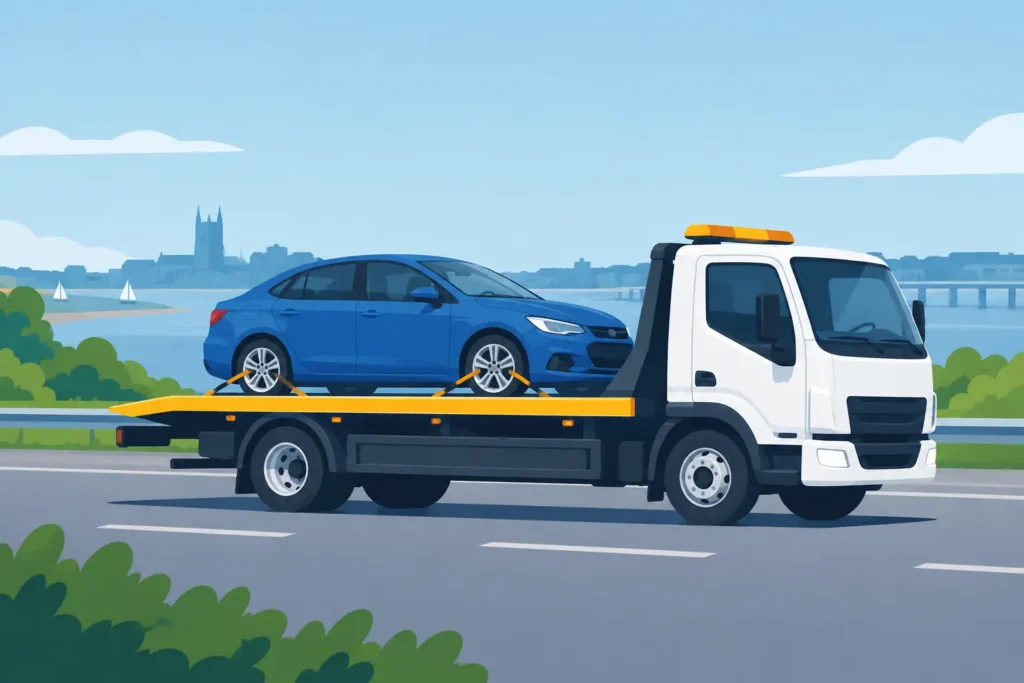
A warning light, a flat tyre or an engine that will not restart can turn an ordinary journey into a stressful roadside stop. When you need car towing within Essex, the priority is not simply moving the vehicle. It is keeping you safe, avoiding further damage and getting your car to the right place without unnecessary delay.
Whether you are stopped outside Chelmsford, on the way home from work, or parked at a customer’s address with a van that will not start, a local recovery service can take the pressure off. The right response depends on where you are, what has happened and where the vehicle needs to go next.
What to do before car towing within Essex arrives
First, put your safety ahead of the car. If you can do so safely, move out of the flow of traffic and switch on your hazard warning lights. On a busy road, keep well away from moving vehicles. If you are on a motorway or a road where stopping is particularly hazardous, get yourself behind a barrier where possible and follow the relevant road-safety guidance.
Take a moment to look at the situation without trying to force a repair. Continuing to drive with an overheating engine, severe tyre damage, a burning smell or a serious warning light can make a manageable fault much more expensive. If the vehicle is losing power, steering poorly or making loud mechanical noises, recovery is usually the sensible option.
When you call for help, clear details make dispatch quicker. Be ready to share your location, the vehicle registration, make and model, the problem you have noticed, and whether the car is in a safe and accessible position. A nearby postcode, road name, landmark or the direction you were travelling can all help a recovery operator find you promptly.
If you have passengers, especially children or older relatives, say so. It helps the recovery team understand the immediate situation and plan the safest practical approach.
When a tow is the safer choice
Not every breakdown means your vehicle has to be towed. A flat battery, an empty fuel tank or a minor issue may sometimes be resolved at the roadside. This can save time and get you back on the road quickly. However, a roadside fix is only worthwhile when it is safe and the problem is genuinely minor.
Towing or transport is generally the better choice after a collision, when a warning light indicates a significant fault, when the engine will not run, or when a damaged tyre cannot be changed safely. It is also sensible if you are unsure what caused the breakdown. Driving on and hoping for the best can risk further damage to the engine, gearbox, wheels or brakes.
For many drivers, the deciding factor is simple: can the vehicle be moved safely under its own power? If the answer is no, professional recovery avoids guesswork. This is particularly important for automatic cars, electric vehicles and newer models with complex systems, where incorrect towing can cause damage.
Where can your car be taken?
One advantage of arranging local car recovery is choosing the destination that works for you. That might be your home, a trusted garage, a dealership, a workplace or another safe address nearby. You do not have to accept a destination that leaves you stranded or creates another problem the following morning.
The best destination depends on the fault. If the car needs diagnosis or repair, a garage may be the practical choice. If it is late, the garage is closed, or you need to get children and belongings home first, taking the vehicle to your driveway can be more useful. You can then arrange repairs when you have had time to consider your options.
For a van or light commercial vehicle, the decision may be more urgent. A tradesperson may need the van taken to a workshop that can work on it quickly, while a delivery driver may need to protect stock and make arrangements for the next shift. Explain your priorities during the call so the recovery can be planned around the job, not just the vehicle.
How professional recovery protects your vehicle
There is a major difference between asking someone to pull a disabled car with a rope and using a suitable recovery vehicle. A professional operator assesses the car’s position, condition and access before loading or towing it. They will also take account of low ground clearance, locked wheels, accident damage and whether the vehicle is safe to roll.
In many cases, loading the vehicle onto a recovery lorry is the safest method. Keeping all wheels off the road reduces wear and avoids placing extra strain on a damaged drivetrain. It can also be the appropriate choice for vehicles that cannot be conventionally towed, including many automatics and electric cars.
Access can affect the plan. A car on a narrow residential street, in a multi-storey car park, on a muddy verge or behind a locked gate may take longer to recover than one parked on a clear driveway. That does not mean the job cannot be done, but it is useful to describe these details before the operator arrives. Honest information helps avoid delays and ensures the right equipment is sent.
Local knowledge matters when time is tight
Essex has every type of recovery challenge: busy commuter routes around Chelmsford, rural lanes with limited passing space, industrial estates, town-centre car parks and fast-moving main roads. A local recovery service understands that the closest route on a map is not always the quickest or safest route for a recovery vehicle.
Local coverage also means the operator is focused on getting to you, rather than working through a distant call centre and a chain of subcontractors. Direct communication is valuable when you are cold, late for work, worried about your family, or trying to protect a day’s income.
Breakdown Recovery Essex provides 24-hour support for cars, vans and light commercial vehicles within a 30-mile radius of Chelmsford. That local approach is designed for the moment you need clear information and practical help, rather than a complicated process.
What affects the cost of a recovery call-out?
Drivers understandably want to know what recovery will cost before agreeing to a tow. The price can vary, but a straightforward explanation should always be available. Key factors include your location, the distance to the chosen destination, the vehicle type, the condition of the vehicle and any access difficulties.
A car stopped safely on an open road and travelling a short distance to a nearby garage is usually simpler than a van stuck in a tight car park or a damaged vehicle that cannot roll. Out-of-hours recovery may also involve different costs, although 24-hour availability can be essential when waiting until morning is not safe or practical.
The cheapest quote is not always the best value if it does not include the type of recovery your vehicle needs. Ask what is covered, whether your chosen destination is included and whether there are likely to be extra charges for difficult access. A clear answer before recovery starts gives you confidence and prevents unpleasant surprises.
Prepare for recovery while you wait
Once help is on the way, gather anything you may need from the vehicle only if it is safe to do so. This could include medication, house keys, a mobile phone charger, work equipment, a child seat or personal belongings. Do not stand in a dangerous position by the roadside trying to empty the car.
Keep your phone available and listen for calls from the recovery operator. If your location changes, for example because the police ask you to move to a safer place, let the recovery team know straight away. If you are in a car park, check whether there are height barriers, payment gates or security staff who may need to be informed.
It is also worth thinking about the next step. If the car is going to a garage, check its opening times where possible. If it is being taken home, consider how it will be positioned so it does not block access. A little planning during the wait can make the recovery smoother when the operator arrives.
Choosing help you can rely on
During a breakdown, you need more than a vehicle with a towing bar. You need an experienced operator who communicates clearly, handles your car carefully and understands that you may be under real pressure. Fast response matters, but safe loading, sensible advice and a destination that suits you matter just as much.
Keep a reliable local recovery number saved in your phone before you need it. If trouble does happen, stay safe, share clear details and choose recovery rather than risking further damage. The quickest route back to normal is often simply getting the vehicle to the right place, safely and without delay.