
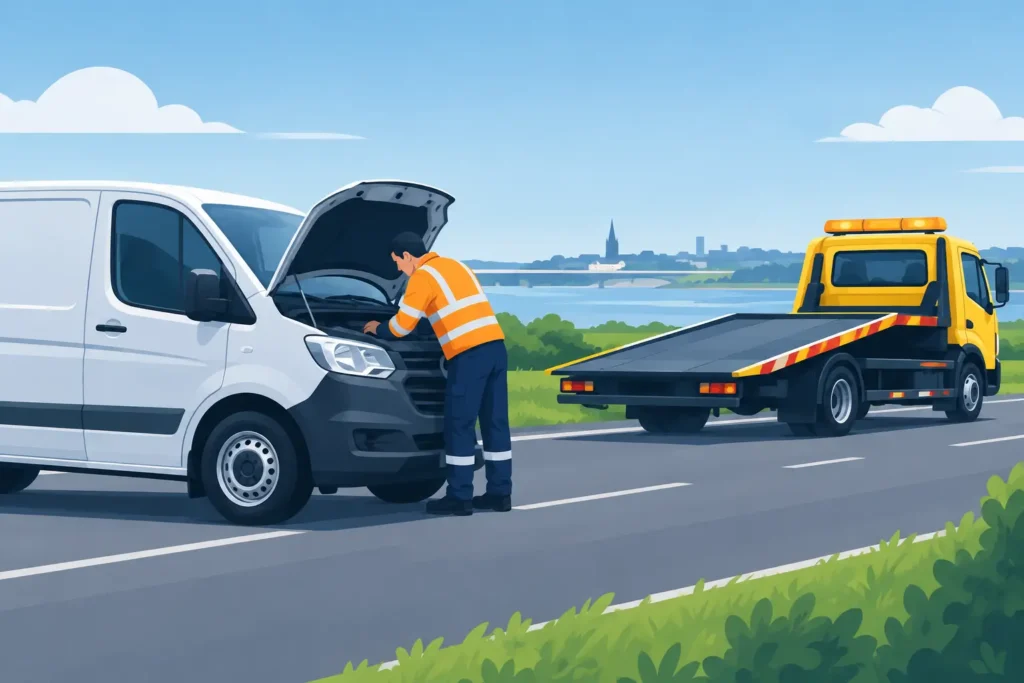
A van stopped at the roadside is rarely just a mechanical problem. It can mean a missed delivery, tools you cannot reach, a customer left waiting or a long journey home after a hard day. When you need van breakdown recovery Essex drivers can rely on, the first priority is keeping yourself safe. The next is getting clear, practical help from someone who understands local roads and can recover your van carefully.
Whether you are on the A12 near Chelmsford, parked outside a customer’s property or stranded on a quieter Essex road, knowing what to do can make a difficult situation much easier to manage.
First steps when your van breaks down
As soon as you notice a problem, look for a safe place to stop. If the van is still moving, indicate early, reduce speed steadily and aim for a lay-by, car park or other safe off-road position. Avoid harsh braking unless there is an immediate danger.
Once stopped, switch on your hazard lights. If it is dark, raining or visibility is poor, use your sidelights where appropriate. Put on a high-visibility vest before leaving the vehicle if you have one, but do not take risks to reach it. On busy roads, keep passengers away from traffic and behind a safety barrier where one is available.
If your van has stopped in a live lane, is creating a danger to other road users, or has been involved in a collision, contact the emergency services first. A recovery operator can deal with the vehicle, but immediate road safety comes before everything else.
Do not keep trying to start a van that has warning lights, smoke, a burning smell, overheating or a serious loss of power. Repeated attempts can turn a manageable fault into a more expensive repair. Turn the engine off, take a moment to assess the situation, and arrange help.
What a recovery operator needs to know
A fast response starts with accurate information. When you call for van breakdown recovery in Essex, give your location as clearly as possible. A road name, postcode, nearby business, junction number, landmark or the direction you are travelling all help an operator find you without delay.
It also helps to explain what has happened. You do not need to diagnose the fault. Simply say whether the van will start, whether it has a flat tyre, whether there has been an accident, and whether it is safe to move. Mention any warning lights, overheating, leaking fluid or unusual noises.
Your van details matter too. The make, model, registration and approximate size help ensure the right recovery vehicle is sent. This is particularly useful for long-wheelbase vans, loaded vehicles and light commercial vehicles with racking or specialist equipment. If the van is carrying a heavy load, tell the operator at the outset. Safe recovery depends on planning for the vehicle as it is, not as it would be on an empty driveway.
Finally, say where you would like the van taken. That may be your home, a trusted garage, your workplace or another destination that suits your situation. A good local recovery service should talk this through with you rather than assume the nearest garage is always the right answer.
Why van recovery needs a careful approach
A van is often heavier, longer and more valuable to its owner’s working day than a family car. It may carry stock, tools, equipment or paperwork that cannot simply be left unattended. That changes the recovery job.
Careful loading matters because vans can have low front bumpers, long rear overhangs or suspension issues that make an unsuitable lift risky. The aim is to secure the vehicle properly and transport it without adding damage. For a van with a puncture or minor fault, practical roadside assistance may be possible. For an engine fault, electrical issue, accident damage or a vehicle that cannot be moved safely, recovery is normally the sensible choice.
There is a trade-off to consider. A quick repair at the roadside can save time, but only when it is safe and likely to last. If there is any doubt, transporting the van to a chosen garage is often the better decision. It avoids a second breakdown, further damage and another lost part of the day.
Common van breakdowns on Essex roads
Many call-outs begin with problems that seem small until they leave a driver unable to continue. Flat batteries are common, especially after cold mornings, short journeys or an interior light being left on. A jump-start may get the engine running, but an ageing battery or charging fault should still be checked soon afterwards.
Tyre damage is another frequent issue. Vans work hard, often carry weight and can pick up nails or road debris. If a tyre has failed, do not drive on it unless you are certain it is safe and legal to do so. Running on a damaged tyre can harm the wheel and make the vehicle harder to control.
Overheating, warning lights, clutch problems and loss of power require more caution. These faults may be caused by anything from a cooling-system issue to a more serious mechanical failure. Pull over safely, switch off when appropriate and arrange recovery rather than guessing. The same applies to unusual smoke, strong smells or fluid pooling beneath the van.
For tradespeople and delivery drivers, security can be as worrying as the breakdown itself. Keep tools, stock and personal belongings out of sight where possible. If recovery is needed, ask what arrangements can be made for you and any essential items. Clear communication makes a stressful situation feel far more manageable.
Local recovery can save valuable time
A local service understands that a breakdown near Chelmsford is not the same as one on a motorway hundreds of miles away. Knowing the surrounding routes, common pinch points and local garage options can help an operator plan a sensible response. It also means you speak directly to people focused on the area where you are stranded.
Breakdown Recovery Essex provides 24-hour support for vans, cars and light commercial vehicles within a 30-mile radius of Chelmsford. The focus is straightforward: assess the situation, get to you as promptly as conditions allow, and recover your vehicle safely to the destination you choose.
That local approach is especially useful outside normal working hours. A van failure at 6 am before a job, or late at night after a delivery run, still needs a clear next step. Waiting until a garage opens may not be practical, and leaving a loaded van at the roadside is rarely a comfortable option.
Protect your working day before a breakdown happens
No maintenance routine can prevent every fault, but a few regular checks reduce the chances of an avoidable stop. Check tyre condition and pressure, engine oil, coolant and screenwash. Pay attention to changes in starting, braking, steering and clutch feel rather than waiting for a warning light.
Keep a basic roadside kit in the van: a charged mobile phone cable, torch, high-visibility vest, warm layer, drinking water and details of your preferred garage. If you carry tools or valuable stock, think about how you would secure them if the van had to be left temporarily.
It is also worth keeping your vehicle documents and service history organised. If a garage needs to investigate a recurring fault, knowing what work has already been done can save time and avoid unnecessary expense.
A breakdown does not have to become a full-day crisis. Stop safely, share accurate details and choose recovery when the van is not safe to drive. If you are stranded now, make the call, stay out of danger and let an experienced local operator take care of getting your van where it needs to be.