
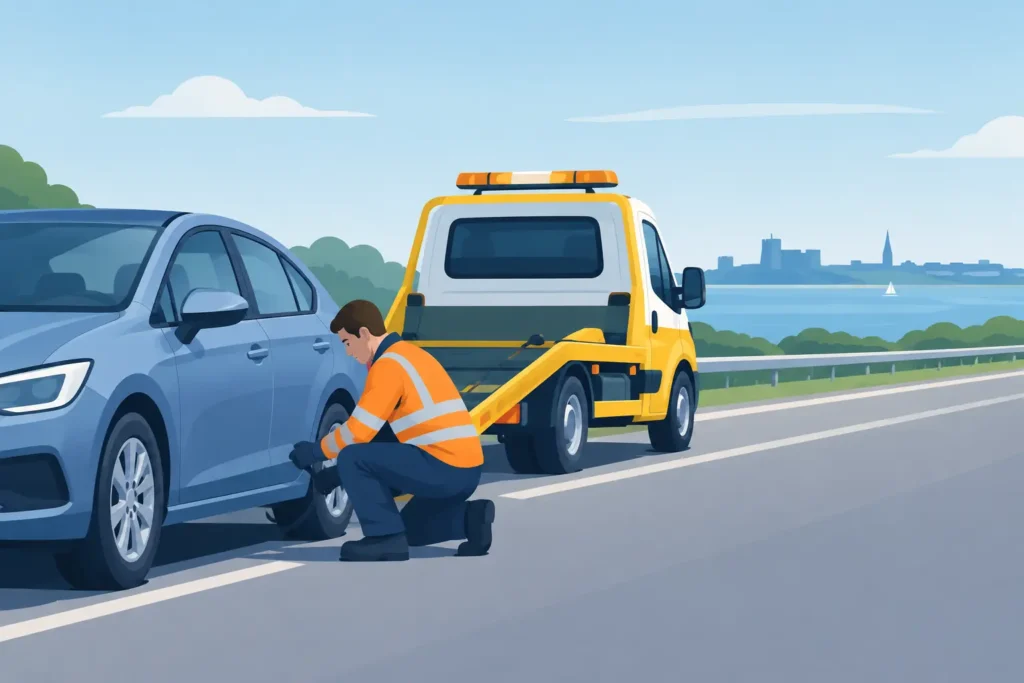
A breakdown rarely happens at a convenient time. It may be on the school run, while heading to work, between deliveries or on a dark road after a late finish. When you need roadside assistance Essex, the priority is simple: get yourself somewhere safe, get clear help quickly and make sure your vehicle is handled properly.
For motorists across Chelmsford and the surrounding area, a local recovery service can remove much of the uncertainty. You should not have to guess where your vehicle is going, wait for updates from a distant call centre or worry that a rushed recovery will cause further damage.
First, make yourself safe
The vehicle matters, but your safety comes first. If your car or van loses power, develops a warning light, gets a puncture or cannot continue safely, indicate early and pull over where it is safe to do so. On a normal road, aim for a safe lay-by, car park or quiet side road where possible. Avoid stopping on bends, narrow stretches or places with poor visibility.
Switch on your hazard lights. If it is dark, raining or foggy, use any safe lighting available to help other road users see you. Put on a high-visibility jacket if you have one, but do not take risks to retrieve equipment from the vehicle or boot if traffic is close.
On a motorway or other high-speed road, the situation is different. Move as far left as possible, use an emergency refuge area if you can reach one, and leave the vehicle from the left-hand side only when it is safe. Stand well behind a barrier where there is one. Do not try to repair a tyre or inspect the engine beside fast-moving traffic.
If you are in an unsafe position, feel threatened or have been involved in a serious collision, contact the emergency services. A recovery operator can deal with a stranded vehicle, but urgent danger always comes first.
What to tell roadside assistance in Essex
Clear information helps a recovery vehicle reach you without delay. You do not need to diagnose the fault. In fact, it is usually better not to guess. Explain what has happened in plain English: the engine will not start, the tyre is flat, there is smoke, a warning light has appeared, or the vehicle has lost power.
Your exact location is just as useful. Give the road name, nearby village or town, a junction number, landmark, postcode or the direction you are travelling. If your phone map shows a dropped pin or coordinates, that can help on rural Essex roads where clear addresses are not always nearby.
It also helps to mention the vehicle type, registration, colour and whether it is a car, van or light commercial vehicle. Tell the operator if the vehicle is in a difficult location, cannot roll, has a damaged wheel, is loaded with tools or goods, or is parked in a low car park. These details allow the right recovery equipment to be sent first time.
Finally, be clear about where you need the vehicle taken. Sometimes that will be home, a trusted garage, a workplace or another destination that suits you. A proper local recovery service should explain the options and agree the destination before recovery begins.
Why local recovery makes a difference
Essex is not one driving environment. A short journey can include congested routes around Chelmsford, country lanes with no street lighting, retail car parks, busy A-roads and industrial estates. Local knowledge matters when a driver is stressed and trying to describe an unfamiliar location.
A provider based nearby can often plan the most sensible approach, understand the likely access issues and give a more realistic idea of arrival. That does not mean every callout has the same response time. Traffic, weather, road closures and demand can affect how quickly a recovery vehicle can reach you. Honest communication is more useful than an unrealistic promise.
There is also a practical benefit in speaking directly to a local team. You can explain the situation to someone arranging the recovery, rather than repeating the same details through several stages. For a tradesperson with tools in a van, a parent with children in the car or a commuter stranded before work, that personal contact can make an already difficult situation feel more manageable.
Recovery is not always just a tow
Not every breakdown needs a full recovery, and not every roadside problem can safely be fixed where you are. The right choice depends on the fault, the location and the condition of the vehicle.
A flat battery, for example, may be resolved with a safe jump-start if the cause appears straightforward. But if the battery is repeatedly failing, there are electrical warning lights or the vehicle will not remain running, transporting it to a garage may be the wiser option. Starting it again is not much help if it leaves you stranded a few miles later.
A puncture can be another judgement call. If you have a usable spare wheel, suitable tools and a safe place to stop, it may be possible to continue. Many newer vehicles have no spare at all, and some tyre damage cannot be repaired at the roadside. Driving on a damaged tyre can harm the wheel and affect control, so recovery is often the safer decision.
Overheating, smoke, fuel leaks, unusual noises or a serious warning light should not be ignored simply because the vehicle still moves. Continuing can turn a repairable fault into expensive engine damage. In these cases, getting the vehicle transported is usually the sensible call.
Breakdown Recovery Essex provides 24-hour emergency recovery and vehicle transport for cars, vans and light commercial vehicles within a 30-mile radius of Chelmsford. Where practical, the aim is to provide helpful roadside support first, then recover the vehicle safely to the destination you choose if it cannot continue.
Looking after your vehicle during recovery
A professional recovery starts before the vehicle is loaded. The operator should assess its position, condition and the safest way to move it. That is particularly important for vehicles with low ground clearance, wheel damage, automatic gearboxes or faults that prevent the engine from starting.
Before the vehicle is taken away, remove valuables and essentials you may need, such as house keys, medication, documents, work equipment or child seats. Take a quick note of the mileage and, if appropriate, photographs of the vehicle’s condition. This is not about expecting a problem. It simply gives you peace of mind and makes handover at a garage easier.
Ask when and where the vehicle will be delivered, especially if the garage is closed. Some garages have key-drop arrangements, while others need the vehicle delivered during opening hours. If you need to travel separately, arrange that before loading begins so nobody is left without a safe way home.
For commercial drivers, make sure the recovery team knows if the van carries valuable stock, specialist tools or time-sensitive equipment. A light commercial vehicle can be recovered safely, but the loading plan needs to account for its weight, contents and condition.
A few checks that can prevent a difficult callout
Breakdowns cannot be avoided completely, but simple checks reduce the chance of being caught out. Check tyre condition and pressure regularly, particularly before longer trips. Keep an eye on engine oil, coolant and screenwash levels, and do not ignore a battery that is slow to start on cold mornings.
It is worth keeping your phone charged, with a charging cable in the vehicle, plus a torch, warm layer, drinking water and a high-visibility jacket. These small items are especially useful on late-night journeys and rural routes. For van drivers, a basic record of servicing and any recurring fault can also help a garage diagnose problems more quickly.
If a dashboard warning light appears, check the vehicle handbook when it is safe to do so. A red warning light generally needs more urgent attention than an amber one, but the exact meaning differs between manufacturers. When in doubt, stop safely and seek advice rather than hoping the problem will disappear.
Help at the point you need it
Being stranded is frustrating, and it can feel far more serious when you are alone, carrying passengers or relying on the vehicle for work. The most useful roadside assistance is not about complicated jargon or a one-size-fits-all response. It is about listening, arriving prepared, protecting your vehicle and helping you make the next sensible decision.
Keep your location clear, put safety before repairs and choose recovery support that understands the roads you use. A calm, professional response can turn a bad stop into a straightforward route home, to the garage or back to work.