
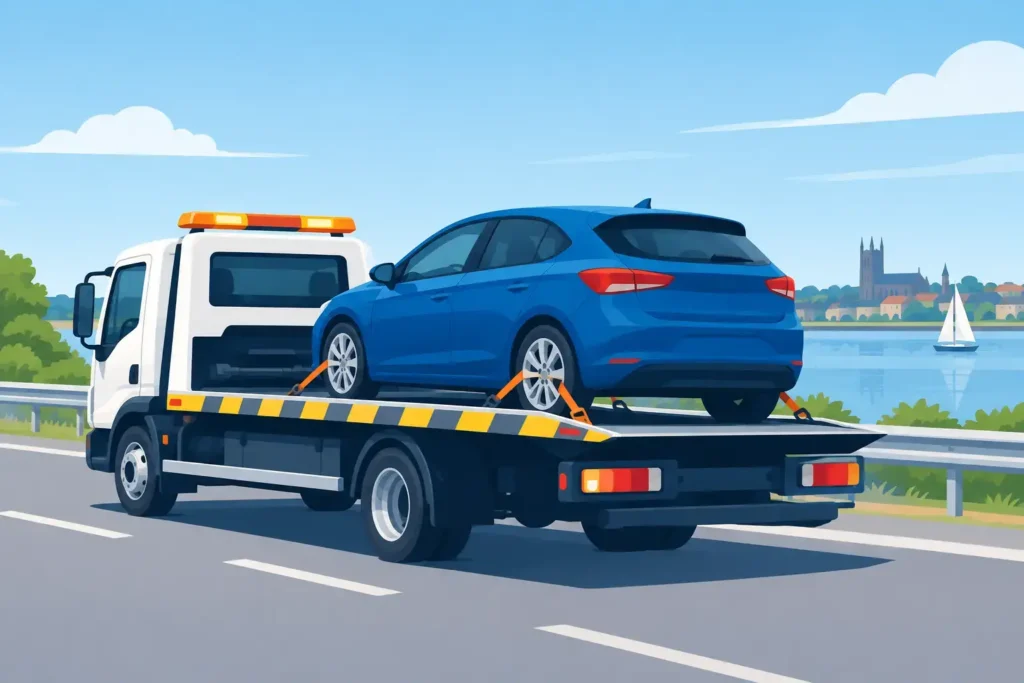
A breakdown on the A12, a flat battery outside work in Chelmsford, or a van that will not restart after a delivery can quickly turn a normal day into a stressful one. Emergency towing is there for the moments when driving on is unsafe, impossible, or likely to cause more damage. The right next step is not to rush. It is to get yourself safe, give clear information, and arrange professional recovery to the place that works for you.
What counts as an emergency towing situation?
Emergency towing is needed when your vehicle cannot be driven safely from its current location. That may be because of an accident, overheating, an engine warning light, a serious mechanical fault, a puncture without a usable spare, gearbox trouble, or a flat battery combined with another issue.
Some faults can be checked at the roadside. A loose battery terminal, an empty fuel tank, or a simple tyre issue may be resolved without moving the vehicle. But if there is smoke, a burning smell, leaking fluid, steering problems, brake trouble, visible accident damage, or an engine that has overheated, do not attempt to carry on. Continuing to drive can make a repair far more expensive and may put you or other road users at risk.
For cars, vans and light commercial vehicles, recovery gives you the option of being taken to your home, a local garage, a workplace or another suitable destination. That matters when you need to protect your vehicle and get control of the situation quickly.
Your first priority is a safe place
Before arranging recovery, think about where you and the vehicle are positioned. If you can safely move off the carriageway, aim for a secure place away from moving traffic. Put on your hazard lights and, if it is dark or visibility is poor, use sidelights where appropriate.
On a normal road, leave the vehicle only when it is safe to do so and stand well away from traffic. Keep passengers together, particularly children, and avoid waiting directly behind or in front of the vehicle. A stranded vehicle can be difficult for other drivers to see, especially on country lanes, in rain, or around bends.
Motorways and fast dual carriageways need extra care. If your vehicle can reach a safe refuge area, use it. If you must stop on the hard shoulder, pull as far left as possible, leave by the left-hand door if safe, and wait behind the barrier. Do not try to diagnose a fault beside fast-moving traffic. On a smart motorway, follow the instructions shown on overhead signs and use an emergency roadside telephone where one is available.
If there has been a collision, anyone is injured, the vehicle is creating immediate danger, or the road is blocked, contact the emergency services first. Vehicle recovery comes after the scene is safe.
What to tell an emergency towing operator
Clear details help a local recovery operator reach you with the right equipment and avoid delays. You do not need technical knowledge. Plain information is enough.
Start with your exact location. A road name, nearby junction, postcode, landmark, petrol station, village name or what3words location can all help. If you are on the A12, A130, M25 or another major route, say which direction you are travelling and the nearest junction or marker.
Then explain what has happened in simple terms. For example: “The engine cut out and will not restart”, “I have hit a pothole and the tyre is flat”, or “The temperature gauge went into the red.” Mention whether the vehicle is in a safe place, whether it will roll, and if there is accident damage.
The operator will also need the vehicle registration, make and model, and whether it is a car, van or light commercial vehicle. If you are carrying tools, stock, passengers, or have a low vehicle, say so. These details help ensure the recovery is planned safely and that there are no surprises on arrival.
Finally, decide where you need the vehicle taken. A garage may be the obvious choice during opening hours, but if it is late at night or the garage cannot accept the vehicle, home recovery may be more practical. A good recovery service should make the destination clear before collection, along with the likely cost.
Why professional recovery is safer than a tow rope
A tow rope may seem like a quick fix, but it is rarely the best option for an unexpected breakdown. It puts both drivers under pressure, requires the towed vehicle to have working steering and brakes, and can be difficult to manage in traffic. It may also be unsuitable for vehicles with automatic gearboxes, electric handbrakes, significant damage, or certain drivetrain systems.
There is also the risk of worsening the original fault. If a vehicle has overheated, has a gearbox issue, or has suffered impact damage, dragging it along the road can cause further problems. Professional recovery equipment allows the vehicle to be loaded and secured properly rather than simply pulled to the nearest location.
That is particularly valuable for vans and work vehicles. A missed day can affect customer appointments, deliveries and income. Careful transport to the right garage or secure location gives you a better chance of getting repairs started without creating another problem.
Choosing the right destination for your vehicle
The nearest garage is not always the right answer. If you have a trusted mechanic, a warranty provider, or a garage that specialises in your make of vehicle, recovery to that destination may save time later. On the other hand, if the fault is minor and a local garage can inspect it quickly, the closest suitable option can get you back on the road sooner.
Think about access as well. Some residential streets, underground car parks and tight driveways are not suitable for every recovery vehicle. Tell the operator if the collection point or destination has height restrictions, narrow access, gates, or limited turning space. A little information beforehand makes the recovery smoother.
Breakdown Recovery Essex provides 24-hour recovery from Chelmsford across the surrounding area, helping drivers choose a practical destination rather than leaving them stranded at the roadside. For many customers, direct contact with a local operator is reassuring when plans have suddenly changed.
While you wait for recovery
Once help is arranged, keep your phone charged and switched on. If you are in a safe location, gather useful items from the vehicle, such as medication, keys, wallets, work equipment and valuables. Do not leave yourself exposed to traffic just to collect non-essential belongings.
If the vehicle is locked, make sure you have the keys available for the recovery operator. Keep any warning lights or fault messages in mind, as these can be useful when the vehicle reaches a garage. Taking a few photographs of accident damage or dashboard warnings can also help with repairs, insurance, or fleet records.
Be cautious with unsolicited offers of help. Most people mean well, but you should only allow an agreed recovery operator to load or move your vehicle. Confirm the company name and vehicle details if anything does not look right.
Preventing the next roadside callout
Not every breakdown can be predicted, but routine checks reduce the risk. Check tyre condition and pressure regularly, keep an eye on coolant and oil levels, and do not ignore dashboard warnings. A battery that is slow to start, a new vibration, or a recurring loss of power is worth investigating before it becomes an emergency.
For van drivers and small businesses, planned maintenance is especially worthwhile. A vehicle off the road can mean cancelled jobs and disappointed customers. Keeping basic details for a trusted local recovery provider in your phone means you are not searching for help while stressed and stuck at the roadside.
When a fault does happen, the most useful thing you can do is stay calm, get to safety, and give accurate information. Fast, careful recovery can turn a difficult roadside moment into the start of a straightforward repair.