
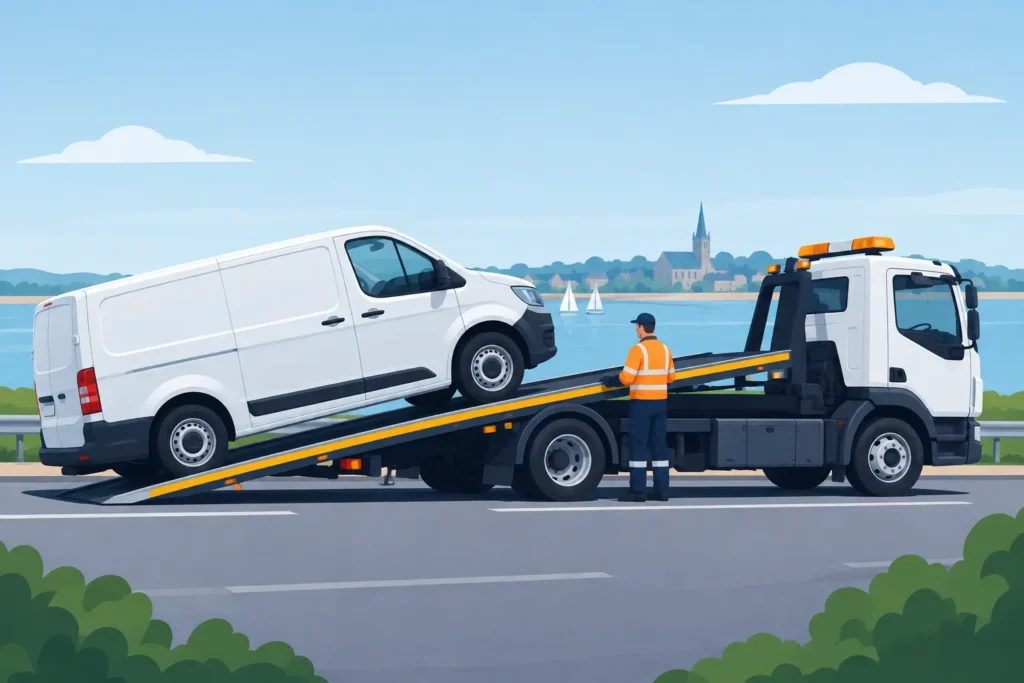
A van that will not start outside a customer’s address is more than an inconvenience. It can mean missed appointments, delayed deliveries, tools left stranded and a working day that quickly becomes expensive. Light commercial vehicle recovery gives Essex tradespeople, couriers and small businesses a safe way to move a disabled van or work vehicle to the right place without risking further damage.
Whether the problem is a flat battery in Chelmsford, an overheating engine near Braintree or a puncture on a busy route through Essex, the priority is the same: protect people first, then arrange practical, professional recovery. The right response can limit disruption and get you clear of the roadside without adding to an already stressful situation.
When to call for light commercial vehicle recovery
Some faults can be resolved at the roadside. A flat battery may respond to a jump-start, a wheel may be changed if it is safe to do so, and a simple fuel issue may have a straightforward answer. But there are times when continuing to drive is not worth the risk.
Call for recovery if the van has lost power, is overheating, has warning lights that indicate a serious fault, has been involved in an accident, or has a tyre or wheel problem that cannot be safely dealt with where you are. Unusual noises, burning smells, fluid leaks and steering or braking problems are also clear reasons to stop. A commercial vehicle may still move under its own power, but that does not mean it should.
This matters particularly for vans carrying equipment, stock or materials. Driving a short distance with an engine fault can turn a manageable repair into major mechanical damage. Equally, trying to change a wheel beside fast-moving traffic, with a loaded van and limited room, can put you in danger. Recovery is not giving up on the job. It is often the sensible way to protect the vehicle, your safety and the next day’s work.
What to do while you wait for recovery
If the vehicle is still moving, get to a safe location where possible. Pull into a lay-by, car park or quiet side road rather than stopping where you block traffic or create a hazard. Switch on your hazard lights and avoid opening the bonnet beside a live carriageway.
On a motorway or major dual carriageway, move behind a safety barrier if it is safe to leave the vehicle. Keep well away from passing traffic and do not attempt repairs at the roadside. If you are unable to exit safely, remain belted in and contact the emergency services where necessary.
Once you are in a safer position, gather the details a recovery operator will need. Your exact location is the most useful starting point. A postcode, road name, nearby landmark or what you can see on a road sign will all help. Explain the vehicle type, whether it is loaded, what has happened and whether it can roll or steer. Mention any low height restrictions, underground car parks, tight access or a vehicle left on private land.
For vans used for work, also think about what is inside. Tools, specialist equipment and high-value stock should be secured before transport. If the rear doors or load area have been damaged, say so when you call. This allows the recovery team to plan the safest way to handle the vehicle.
Why van recovery needs the right approach
Light commercial vehicles vary widely. A compact car-derived van is very different from a long-wheelbase, high-roof van carrying ladders, machinery or a full load. The weight, length, ground clearance and condition of the vehicle all affect how it should be recovered.
A professional operator will assess whether the vehicle is best moved on a recovery lorry or by another suitable method. In many cases, transporting the whole vehicle is the safest option because it keeps non-running wheels, damaged suspension and the gearbox out of harm’s way. It is also a better choice after an accident or when the cause of the breakdown is unclear.
There can be trade-offs. A recovery to the nearest garage may be quickest if the repairer has availability and can diagnose the fault promptly. However, it may be more useful to take the van to your usual garage, your home, a depot or another destination you choose. For a self-employed driver, collecting tools or protecting a load before repairs may be the immediate priority. Clear communication at the start helps ensure the recovery is arranged around the practical needs of the job, not just the vehicle’s location.
Choosing a destination after a breakdown
The best destination depends on the fault, the time of day and what you need from the vehicle next. If a trusted garage is open and has space, that may be the obvious choice. If the breakdown happens late at night, recovery to home or a secure yard can be more sensible, with repairs organised in the morning.
For business owners, a depot may be preferable if another driver needs to collect stock, paperwork or equipment. If the van is on lease, you may have instructions from the leasing company about approved repairers, so check these where possible. When the vehicle has been involved in a collision, avoid moving it unnecessarily until you have recorded its condition and spoken to your insurer if required.
The important point is that you should not feel pressured into a destination that does not work for you. A local recovery service should explain the options plainly and transport your vehicle carefully to the agreed location.
Keeping downtime under control
No one can prevent every breakdown, particularly when a van covers long distances, makes frequent stop-start journeys or carries heavy loads. A few routine checks do reduce the chance of an avoidable call-out. Check tyres for damage and correct pressure, keep an eye on engine oil and coolant levels, and do not ignore warning lights simply because the van still drives.
Battery condition deserves attention too. Vans that sit unused between jobs, run additional electrical equipment or make repeated short journeys can develop starting problems. Before a busy period, check that lights, wipers and brakes are working properly, especially if you are travelling early or in poor weather.
It also helps to keep basic information accessible: your vehicle registration, insurance details, garage contact and a note of any breakdown cover arrangements. This will not stop a fault, but it can make a stressful call much quicker when time matters.
Local recovery when work cannot wait
A local operator understands that a breakdown near Chelmsford can affect more than one appointment. Traffic around town, rural lanes, estate access and busy routes all influence how quickly a vehicle can be reached and loaded. Direct contact with a nearby recovery provider avoids the uncertainty of being passed between call centres while you are trying to manage customers, staff or a delayed delivery.
Breakdown Recovery Essex provides 24-hour assistance for cars, vans and light commercial vehicles across Chelmsford and the surrounding area. The aim is simple: arrive promptly, handle the vehicle safely and take it to the destination that makes most sense for you.
If your van is stranded, do not gamble on driving through a serious fault or attempting a risky roadside repair. Get yourself to a safe place, make the vehicle visible and arrange recovery with clear details. A calm, practical response now gives you the best chance of protecting your vehicle and getting your work back on track.