
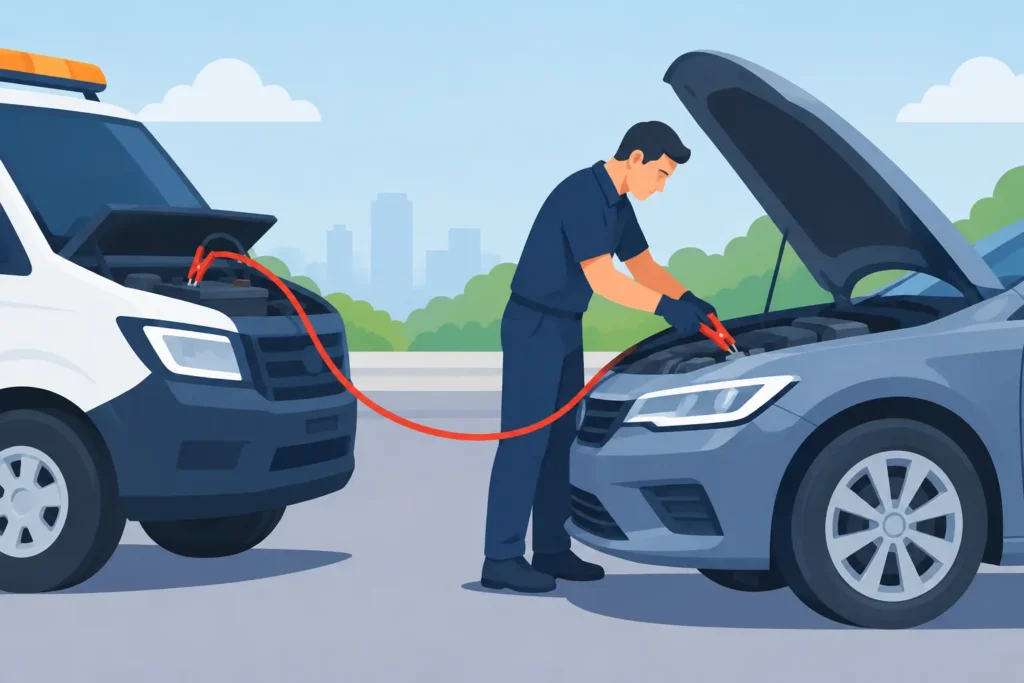
A flat battery rarely happens at a convenient time. You may be outside work in Chelmsford, on the school run, parked at home before an early shift, or stopped after a late delivery. A car battery jump start service can get the engine running again quickly, but the safest next step depends on why the battery went flat in the first place.
If the dashboard lights are dim, the engine clicks but will not turn over, or there is no response when you turn the key or press the start button, a discharged battery is a likely cause. There are other possibilities, though, including a faulty starter motor, alternator trouble or poor battery connections. A practical roadside assessment helps avoid wasting time trying to jump-start a vehicle that has a different fault.
What to Do When Your Battery Is Flat
First, put safety before speed. If you are on a busy road, pull over only if the vehicle can still be moved safely. Switch on your hazard lights, keep clear of moving traffic and avoid standing between vehicles. On a motorway or high-speed road, get behind a safety barrier where possible and seek professional assistance rather than attempting a roadside jump start yourself.
At home, in a car park or on a quiet street, turn off the ignition, lights, radio, heated screens and other electrical items. Check that the vehicle is in park or neutral with the handbrake firmly on. If you have left an interior light on or used electrical accessories with the engine off, the battery may simply need a proper recharge after it has been started.
Avoid repeated starting attempts. Each attempt takes more power from an already weak battery, and continuously turning the key can leave you with even less chance of getting going. If the engine does not start after a sensible check, a callout is often quicker and safer than waiting for a passing motorist with jump leads.
How a Car Battery Jump Start Service Helps
A professional car battery jump start service uses suitable equipment to provide the power needed to start your vehicle without relying on another driver’s car. This is particularly helpful when you are parked in an awkward space, alone at night, or driving a van or light commercial vehicle that cannot afford to lose more time.
The operator will normally check for obvious warning signs before connecting equipment. Heavy corrosion around the terminals, loose leads, a swollen battery case or a strong smell can indicate that a jump start is not the right answer. Trying to force a start in these circumstances can create more damage or introduce a safety risk.
Once the vehicle starts, the job is not always finished. A good roadside operator can help you decide whether it is sensible to drive on, head directly to a garage or arrange recovery to a destination of your choice. If the battery is old or the charging system appears faulty, switching the engine off again at your next stop could leave you stranded a second time.
Breakdown Recovery Essex provides 24-hour local support for drivers across Chelmsford and the surrounding area, with practical help where a safe roadside fix is possible and recovery available when it is not.
Why Car Batteries Go Flat
Many flat batteries have a simple explanation. Leaving lights, a charging cable, dash camera or interior lamp running can drain a battery overnight. Cold weather can also expose a battery that was already weakening, as the engine needs more power to start while the battery delivers less.
Short journeys are another common cause. Starting a vehicle uses a significant amount of charge, and a series of brief trips may not give the alternator enough time to replace it. This is common for cars used mainly for school runs, local errands or occasional weekend driving.
Battery age matters too. Most batteries do not last forever, and performance tends to fade over time rather than fail all at once. A battery that has needed a jump start more than once should be tested before you depend on it for a long journey, work visit or family plans.
It may also be an alternator fault. The alternator recharges the battery while the engine runs. If it is failing, the vehicle may start with a boost but lose power again soon afterwards. Warning lights on the dashboard, flickering headlights or electrical systems behaving strangely can all point to a charging issue rather than a battery that simply needs replacing.
Can You Jump-Start a Car Yourself?
You can, in some situations, but it is not always the best choice. Modern vehicles contain sensitive electronics, and connecting leads in the wrong order can cause expensive damage. Some cars also have designated jump-start points rather than easily accessible battery terminals. Hybrid and electric vehicles require additional care, so never assume that the process is identical to that of a conventional petrol or diesel car.
If you do use jump leads, use good-quality leads, follow your vehicle handbook and make sure both vehicles are switched off before connecting anything. Keep metal tools, jewellery and loose clothing away from the battery area. Never attempt to jump-start a visibly damaged or leaking battery.
A portable jump pack can be useful, especially for drivers who travel regularly for work. However, it needs to be charged, compatible with your vehicle and used correctly. It is a worthwhile backup, not a replacement for investigating a battery that repeatedly goes flat.
When a Jump Start Is Not Enough
A successful start does not prove that the vehicle is reliable. If the engine cuts out shortly after starting, a battery warning light remains on, or the vehicle has no power steering, braking assistance or normal electrical function, do not continue driving. Stop somewhere safe and arrange recovery.
The same applies if you hear grinding noises, smell burning, see smoke or notice a damaged battery. These signs need professional attention, not another boost. For vans and light commercial vehicles, the cost of pushing on with a fault can be greater than the inconvenience of getting the vehicle recovered promptly.
There are times when recovery is the better option from the outset. Perhaps you are far from home, the battery has failed more than once that day, or you need to protect a vehicle that is loaded with tools or equipment. A local recovery service can take the vehicle to your home, workplace, garage or another suitable destination, rather than leaving you to take a chance on a second failure.
Reducing the Chance of Another Flat Battery
A few simple habits make a real difference. Before leaving the car, check that headlights and interior lights are off. If the vehicle is used infrequently, take it for a longer drive from time to time or consider a battery conditioner suitable for your vehicle. Keep battery terminals clean and have the battery tested if starting becomes sluggish.
For drivers who rely on a vehicle every day, do not ignore small changes. Slower cranking on cold mornings, dimmer lights or a stop-start system that no longer operates properly can all be early warnings. Booking a battery and charging-system check is usually easier than dealing with a no-start situation in the rain, in the dark or when you are already late.
If your vehicle will not start, focus on getting yourself somewhere safe first. A quick, professional assessment can turn a stressful delay into a clear next step, whether that is a jump start, a battery replacement or careful recovery to where you need to be.