
A warning light on the A12, a flat battery outside work in Chelmsford, or a tyre problem on a dark country road can force a quick decision: do you need roadside repair or recovery? The right answer is not always the fastest-looking option. A small, safe fix may get you moving again, but continuing with a serious fault can turn an inconvenient breakdown into a dangerous situation or a costly repair.
For drivers across Essex, the priority is simple: protect the people at the roadside first, then protect the vehicle. Here is how to judge what is sensible while help is on the way.
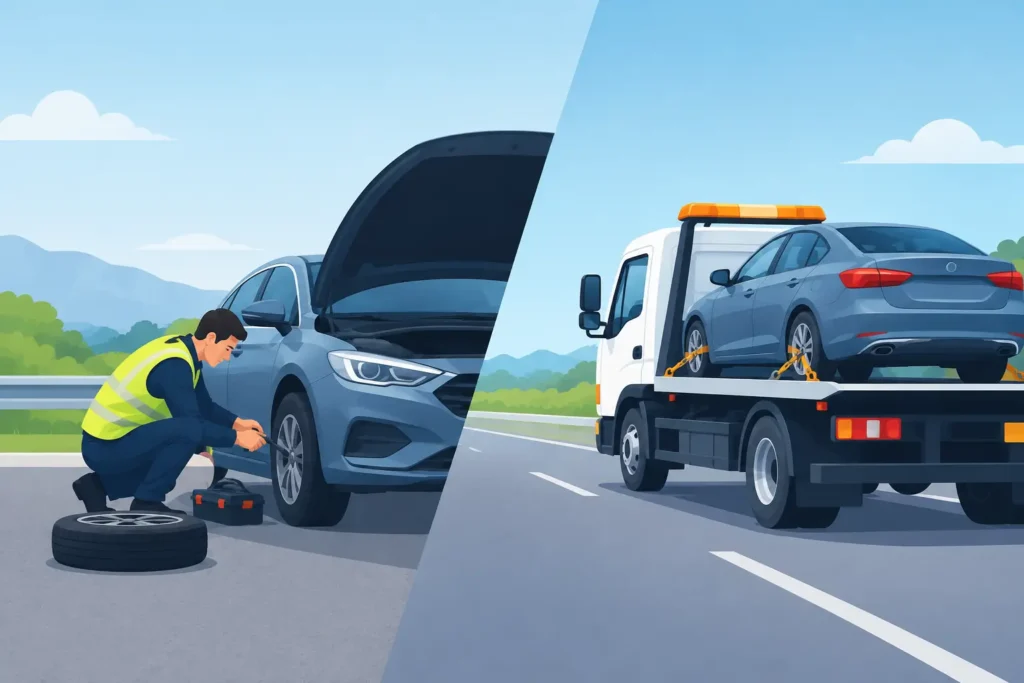
Roadside Repair or Recovery: What Is the Difference?
A roadside repair is a practical fix carried out where the vehicle has stopped, with the aim of getting it safely mobile. This might include a battery boost, fitting a spare wheel where it is safe to do so, helping with a flat battery, or dealing with a minor issue that does not make the vehicle unsafe to drive.
Recovery means loading or towing the vehicle to a destination you choose, such as home, a garage, a workplace or a safe local location. It is the better option when the vehicle cannot be driven safely, the cause is unclear, or an on-the-spot repair would put you or the recovery operator at risk.
Neither option is automatically better. It depends on the fault, where you are stopped, the condition of the vehicle and whether a short journey could cause further damage.
When a Roadside Repair May Be Enough
A straightforward repair can be a useful outcome when the issue is minor and the vehicle is otherwise sound. The key word is safe. A quick fix is only worthwhile if it gives you a reliable vehicle for the journey that follows, not merely enough movement to leave the roadside.
Flat battery or accidental battery drain
If you have left lights on, used accessories while parked, or the battery has simply lost charge, a jump-start may be all that is needed. Once the engine is running, avoid assuming the issue has disappeared. A weak battery, loose connection or charging fault can leave you stranded again soon after.
If the vehicle starts and drives normally, it may be reasonable to head directly to a garage or home. If warning lights remain on, the engine cuts out, or the battery has repeatedly gone flat, recovery is the safer choice.
A puncture with a usable spare wheel
A puncture can sometimes be dealt with at the roadside if you have a properly inflated spare, the wheel can be changed safely, and you are away from fast-moving traffic. Not every car has a spare wheel, and tyre repair foam is not suitable for every type of damage.
A damaged sidewall, split tyre, bent wheel or more than one puncture is not a roadside-fix situation. Do not drive on a tyre that is visibly damaged or fully deflated. It can damage the wheel, affect steering and make the vehicle hard to control.
Minor access or starting problems
Keys locked in a vehicle, a flat key-fob battery, or a simple starting issue may be resolved without a full recovery. However, modern cars can have immobiliser systems and electronic faults that need proper diagnosis. Forcing a lock, repeatedly attempting to start the engine, or bypassing safety systems can create a bigger problem.
Signs That Recovery Is the Safer Option
Some faults give clear warning that the vehicle should not be driven. Others are less obvious, especially when you are late for work, carrying tools, or trying to get children home. If you are unsure, err on the side of recovery. A recovery callout is usually far less expensive than engine damage, accident repairs or a breakdown in a more hazardous place.
Recovery is normally the right call if you notice:
- smoke, flames or a strong smell of fuel
- overheating, steam from under the bonnet, or a major coolant leak
- an oil-pressure warning light or obvious oil leak
- serious engine noise, loss of power or repeated stalling
- damaged steering, brakes, suspension, lights or bodywork after an incident
- a gearbox problem that prevents normal movement
- a vehicle that is stuck, unsafe to move, or obstructing the road
Do not open the bonnet if there is smoke or fire. Move yourself and any passengers to a safe place, keep well clear of the vehicle and call the emergency services if there is immediate danger.
A red warning light is another reason to stop and assess the situation. Red lights commonly indicate a fault needing urgent attention, although the handbook for your particular vehicle remains the best guide. Continuing to drive with an oil-pressure or temperature warning can cause severe engine damage within minutes.
Your Location Can Change the Decision
The same flat tyre is very different on a quiet residential street compared with the hard shoulder of a major road. A repair that might be reasonable on your driveway may be unsafe beside moving traffic, around a blind bend, or in poor weather.
If you break down on a motorway, get behind a safety barrier where possible and move well away from traffic. Use an emergency telephone if it is available and safe to reach. On smart motorways, follow the signs and instructions around emergency areas. Do not attempt a tyre change at the roadside of a motorway.
On ordinary roads, put on your hazard warning lights, stop where you are visible if possible, and leave the vehicle from the side away from traffic. Wear a high-visibility jacket if you have one, particularly after dark or in poor visibility. Keep children and passengers away from the carriageway.
If you are in an unsafe position, tell the recovery provider exactly where you are, which direction you were travelling, and the nearest landmark, junction or postcode. Clear location information helps a local operator reach you without delay.
Avoid Making the Fault Worse
It is natural to want to try one more restart or limp the vehicle to the next garage. That urge can be costly. Repeatedly cranking a vehicle with a mechanical fault can flatten the battery. Driving while overheating can damage the cylinder head. Continuing on a damaged tyre can ruin the wheel and compromise handling.
Do not pour cold water over a hot engine, remove a radiator cap when the engine is hot, or work underneath a vehicle held only by a jack. Avoid accepting help from an unknown person who asks for money before any work is done. A professional recovery operator should explain what can be safely attempted and what needs transporting.
It also helps to be honest about what happened before the breakdown. Mention any warning lights, unusual noises, loss of power, recent repairs, impact with a pothole or kerb, and whether the vehicle has been leaking fluid. These details can help determine whether a roadside repair is realistic or whether recovery should be arranged straight away.
What to Have Ready When You Call
You do not need mechanical knowledge to request assistance. The useful information is practical: your registration number, vehicle make and model, location, the fault as you understand it, and where you would like the vehicle taken if recovery is needed.
Tell the operator if the vehicle is a van or light commercial vehicle, whether it is loaded, and whether it is in a car park with height restrictions, underground access or a narrow lane. This allows the right recovery equipment to be sent. If you are carrying passengers, pets, or need to reach a particular garage, say so early in the call.
Breakdown Recovery Essex provides 24-hour support for cars, vans and light commercial vehicles within around 30 miles of Chelmsford. Where a practical roadside solution is safe, it can save time. Where it is not, careful recovery to your chosen destination gives you a safer next step.
Let Safety Make the Final Call
The best decision is not always the one that gets the car moving quickest. If the vehicle has a minor fault, is parked safely and can be made roadworthy, a roadside repair may be enough. If there is any doubt about safety, damage or the cause of the fault, recovery gives you the chance to deal with the problem properly rather than gamble on the next mile.
When you are stranded, take a breath, get yourself somewhere safe and make the call. A calm decision at the roadside can prevent a much bigger problem later.