
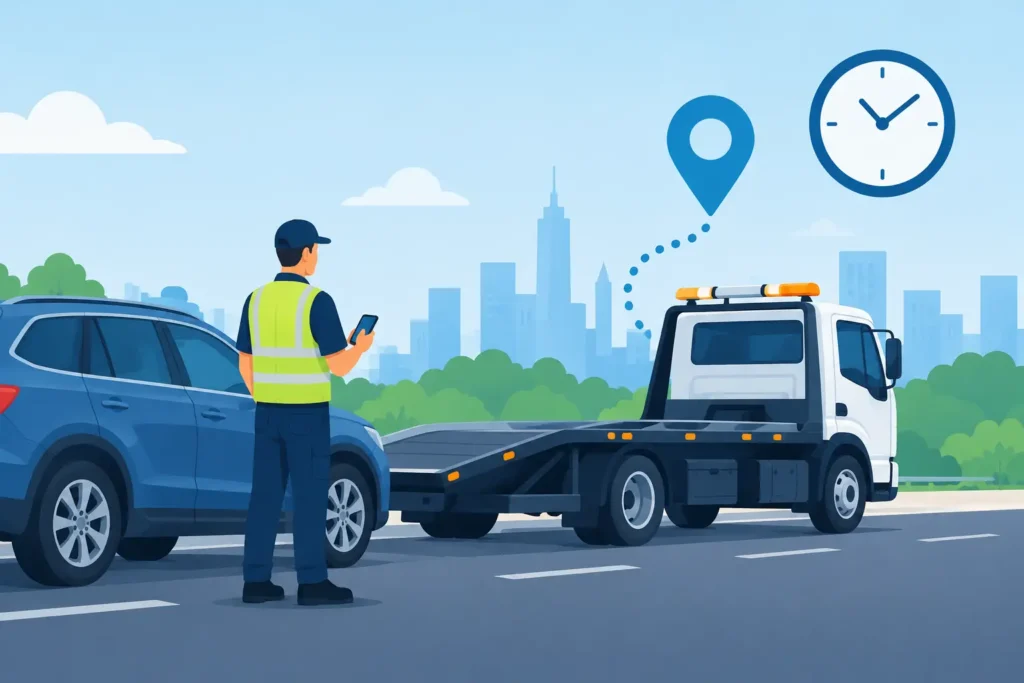
A breakdown rarely happens at a convenient time. It may be on the school run, between jobs, on a dark country road or just as you are trying to get home after a long shift. Understanding recovery operator arrival times can take some of the uncertainty out of that moment, helping you stay safe and give the recovery team what they need to reach you without delay.
The honest answer is that no responsible recovery operator should promise the same arrival time for every call-out. Traffic, your exact location, the type of vehicle and the condition of the road all matter. What you can expect from a good local recovery service is clear communication, a realistic estimated arrival time and an experienced operator who is properly prepared for the job.
Why recovery arrival times vary
Recovery work is not like ordering a taxi from a fixed route. Each call needs to be assessed first. A driver stuck in a supermarket car park with a flat battery may need a different response from a van stranded on the A12, or a car that has suffered accident damage and cannot be driven safely.
Your location is usually the biggest factor. Chelmsford and nearby towns can be reached quickly when an operator is already working locally and the roads are moving well. A call-out on a rural lane, a difficult-to-find industrial estate or a motorway route may take longer, especially if the operator needs to approach from a safe direction or work around heavy traffic.
Time of day matters too. Rush-hour congestion around Chelmsford, roadworks, school traffic and serious incidents can all slow a recovery vehicle down. Overnight roads are often clearer, but poor visibility, flooding, ice or a location away from main roads can still affect the journey.
There is also the type of recovery to consider. If a vehicle simply needs a jump start or a wheel change, the nearest suitable operator may be able to attend quickly. If a car, van or light commercial vehicle needs loading and transporting, the recovery team must ensure the correct vehicle and equipment are sent. Taking a few minutes to get that right is better than arriving with unsuitable equipment and causing a further delay.
What happens after you make the call
The fastest recoveries start with accurate information. When you call, the operator will normally ask where you are, what vehicle you have, what has happened and whether you are in a safe place. This is not paperwork for its own sake. It allows the team to identify the right recovery vehicle, plan the route and prepare for any access issues before setting off.
Be ready to give your registration, make and model, your destination, and a clear description of the fault or damage. If the vehicle is blocked in, has a locked wheel, is in a low car park, or has been involved in an incident, say so early. The more the operator knows, the more accurate the estimated arrival time will be.
A useful location description includes more than the name of a road. Look for the nearest junction, landmark, postcode, road number or direction of travel. If you are on a dual carriageway, say which carriageway you are on. On an unlit lane, a what3words reference or a dropped pin can be helpful if you can provide it safely.
Once the job is accepted, a local operator will usually confirm the expected response time based on the current workload and travel conditions. That estimate may change if there is a major traffic hold-up or an emergency incident on the route, but you should not be left wondering. Clear updates are part of good roadside service.
Understanding recovery operator arrival times in Essex
Essex presents a mix of busy urban roads, fast A-roads, village lanes and commercial estates. That variety is one reason recovery operator arrival times need to be based on the real conditions at the time of your call rather than a blanket promise.
For motorists within a 30-mile radius of Chelmsford, a local operator has a practical advantage: they know the main routes, common congestion points and the areas that can be harder to access. They are also less likely to be relying on a distant national dispatch centre to pass details between several parties.
That does not mean every local call is immediate. If the nearest recovery vehicle is completing another job, it may need to safely unload a customer’s vehicle before attending the next call. The key difference is that you can speak directly to a team that understands the area and can give you a realistic answer, rather than a vague estimate generated from a wider network.
Priority can also depend on safety. A vehicle stopped in a live lane, on a dangerous bend or in another exposed position needs urgent attention. Operators may coordinate with the police, National Highways or traffic officers where necessary. If you are safely parked off the carriageway, your call is still important, but a more dangerous incident may understandably take priority.
How to help the operator reach you faster
The best thing you can do is make yourself easy to find and keep your phone available. If it is safe to do so, switch on your hazard warning lights and use sidelights in poor visibility. If you have a warning triangle, only place it where it is safe and appropriate. Do not put yourself at risk trying to make the vehicle more visible on a fast road.
Keep your phone charged where possible and answer calls from the recovery team. Operators may need to confirm a turn-off, gate code, vehicle position or change in access. If you need to move to a safer location, tell them immediately rather than assuming they will find you where you were originally parked.
Avoid attempting repairs you are not confident carrying out, particularly beside moving traffic. Opening the bonnet, checking a tyre or looking for a loose connection may seem harmless, but roadside conditions can change quickly. Your safety matters more than saving a few minutes.
If you are on a motorway or an all-purpose high-speed road, move behind the barrier if it is safe to leave the vehicle, keeping clear of traffic. On smart motorways and live lanes, follow official safety guidance and use an emergency phone where available. A recovery operator can assist with your vehicle, but they cannot remove the immediate danger of passing traffic, so protecting yourself comes first.
When a longer wait may be the safer option
No one wants to hear that they may need to wait, especially if they are cold, late or worried about getting children home. But a longer estimate is sometimes the responsible answer. Severe weather, road closures, multiple collisions or an unusually busy period can put pressure on local recovery resources.
In these circumstances, an honest operator should explain the position rather than offer an unrealistic arrival time. They may be able to give practical advice while you wait, such as whether the vehicle can be moved to a safer nearby space, whether you should arrange onward travel, or whether a different collection point would make recovery easier.
The destination can affect the job too. Recovering a vehicle to your home, a garage of your choice or a secure location is usually straightforward when access is available. A low entrance, narrow driveway, locked gate or restricted-height car park may require a different plan. Mentioning these details at the start avoids surprises later.
What good communication looks like
A reliable recovery service does not treat the arrival estimate as the end of the conversation. You should know who is attending, have a sensible idea of when to expect them and be able to speak to someone if conditions change.
At Breakdown Recovery Essex, the focus is on direct, practical support for drivers across the local area. That means assessing the situation properly, sending suitable help and recovering your vehicle carefully to the destination you choose where possible. Fast response matters, but so does arriving ready to do the job safely.
If your vehicle breaks down, try to focus on the next sensible step rather than the whole disruption ahead. Get yourself to safety, share a precise location, keep your phone close and ask for a realistic estimated arrival time. A calm, well-informed call gives the recovery operator the best chance of reaching you quickly and getting you moving again.